Algae Blooms and the
Future of Lake Erie
Despite years of effort, phosphorus loading continues to fuel toxic blooms that threaten drinking water, tourism, and ecosystems
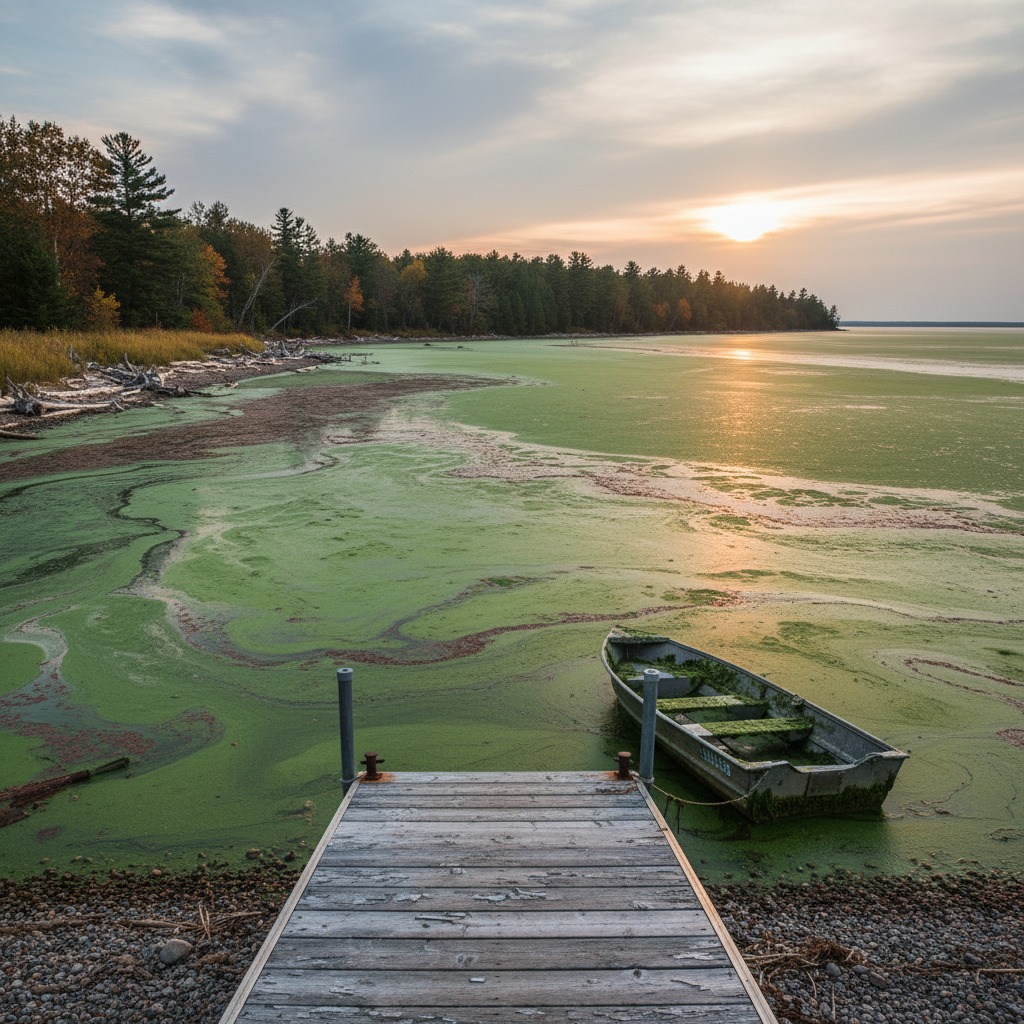
Every summer, satellite images of western Lake Erie reveal the same unwelcome sight: vast green smears spreading across the surface, sometimes stretching from the Ontario shore nearly to Ohio. These are cyanobacterial blooms, commonly called blue-green algae, and they have become one of the most visible environmental crises facing the Great Lakes. What those satellite images do not show is the toxin called microcystin that some of these blooms produce, a substance harmful to humans, pets, and wildlife that in 2014 forced the city of Toledo to shut off its drinking water supply to nearly 500,000 people.
Lake Erie is the shallowest and warmest of the Great Lakes, which makes it both the most productive and the most vulnerable. Its western basin, where the Maumee River and other tributaries deliver nutrient-rich water from some of the most intensively farmed land in North America, has become ground zero for harmful algal blooms. But the problem is not confined to the American side. Ontario communities along the north shore of Lake Erie, from Pelee Island to Port Colborne, are affected by the same blooms and face the same risks to their drinking water, their beaches, and their tourism economies.
The Phosphorus Problem
The primary driver of algae blooms in Lake Erie is phosphorus, specifically dissolved reactive phosphorus that algae can absorb directly from the water. Phosphorus enters the lake from multiple sources: agricultural runoff carries fertilizer and manure from fields; urban stormwater washes lawn fertilizers, pet waste, and other organic material into tributaries; wastewater treatment plants discharge phosphorus-containing effluent; and internal loading from lake-bottom sediments recycles phosphorus that has accumulated over decades.
Agriculture is the dominant source. The watersheds draining into western Lake Erie contain vast areas of corn and soybean production, much of it on tile-drained clay soils that efficiently deliver dissolved phosphorus to streams and rivers during rain events. Despite improvements in farming practices and voluntary stewardship programs, total phosphorus loading into the western basin has not declined meaningfully in the past two decades. In some years, it has increased.
The binational Great Lakes Water Quality Agreement set a target of reducing phosphorus loading to the western basin by 40 percent from 2008 levels. Both Canada and the United States committed to this target, and both have developed action plans outlining the steps needed to get there. Progress has been slow. Voluntary approaches that rely on farmers to adopt best management practices have had limited uptake. Regulatory measures, such as restrictions on fall application of manure or requirements for cover crops, face political resistance from agricultural interests.
Climate Makes It Worse
Climate change is compounding the phosphorus problem in several ways. Warmer water temperatures extend the growing season for algae and create conditions that favour the cyanobacteria species most likely to produce toxins. More intense rainfall events flush larger pulses of nutrients from the land into the lake. Longer periods of warm, calm weather in summer allow blooms to persist and expand.
Researchers have found that even if phosphorus loading were reduced to target levels, warming water temperatures could offset some of the gains by making the lake more hospitable to bloom-forming species. This means that the 40 percent reduction target may not be sufficient to eliminate harmful blooms. It may only reduce their frequency and severity to more manageable levels.
Lake Erie's shallow depth makes it particularly responsive to climate warming. The western basin averages only about 7.4 metres deep, and during calm summer periods, the water column can stratify, with warm surface water sitting on top of cooler bottom water. When the bottom water becomes depleted of oxygen, a condition called hypoxia, phosphorus stored in the sediments is released back into the water column, feeding additional algae growth. This internal loading creates a feedback loop that can sustain blooms even when external inputs decline.
Impacts on Communities
The effects of algae blooms ripple through every aspect of life along the Lake Erie shore. Drinking water treatment plants that draw from the lake must invest in additional treatment capacity to handle microcystin, the toxin produced by certain bloom species. The costs of this enhanced treatment are passed on to ratepayers. Smaller water systems, particularly those serving rural communities along the north shore, have fewer resources to invest in advanced treatment technology.
Beach closures due to algae blooms affect tourism and recreation, both of which are vital to the economies of shoreline communities. When beaches are posted with health advisories, visitors stay away. Fishing guides cancel trips. Cottage rentals lose bookings. The cumulative economic impact of bloom-related closures and advisories across the Lake Erie basin has been estimated in the hundreds of millions of dollars annually.
Property values along affected shorelines have also been impacted. Research suggests that proximity to recurring algae blooms can reduce waterfront property values, though the relationship is complicated by other factors. What is clear is that no one wants to swim, fish, or boat in water that smells like sewage and is covered in green scum.
What Ontario Is Doing
Ontario's response to the Lake Erie algae crisis has included both voluntary and regulatory measures. The Ontario government released a Canada-Ontario Lake Erie Action Plan in 2018 that outlined commitments to reduce phosphorus loading through agricultural best management practices, improved wastewater treatment, and urban stormwater management. The plan set specific targets for phosphorus reduction from Ontario sources and committed funding for on-farm stewardship programs.
On the agricultural front, programs have encouraged the adoption of precision nutrient management, buffer strips along waterways, and cover cropping to reduce erosion and nutrient loss. Some Ontario municipalities in the Lake Erie watershed have invested in upgraded wastewater treatment that reduces phosphorus in effluent to very low levels. Conservation authorities have undertaken stream restoration and wetland enhancement projects aimed at capturing nutrients before they reach the lake.
These measures are moving in the right direction, but they are not yet delivering the scale of phosphorus reduction needed to meet the 40 percent target. The challenge is that the sources of phosphorus are diffuse, spread across thousands of farms and hundreds of urban areas, and the most cost-effective measures, such as changes in tillage practices and fertilizer application timing, depend on voluntary adoption by individual landowners.
The Road Ahead
Solving the Lake Erie algae problem will require sustained effort over decades. There is no single intervention that will fix it. The most effective approach will likely combine stricter regulation of phosphorus application in the most vulnerable watersheds, expanded funding for on-farm best management practices, continued investment in wastewater treatment upgrades, and restoration of wetlands and riparian buffers that intercept nutrients before they reach the lake.
It will also require honest acknowledgment that the problem is fundamentally about land use. The way we farm, develop, and manage land in the Lake Erie watershed determines how much phosphorus reaches the lake. Changing those land use patterns is a generational challenge that involves economic trade-offs, political negotiations, and shifts in cultural practice.
For the communities along the Ontario shore of Lake Erie, the stakes could not be higher. Their drinking water, their beaches, their property values, and their quality of life depend on getting this right. The green blooms that appear every summer are a visible reminder that despite years of talk and planning, the lake is still waiting for meaningful change.
By Maren Falk, Environment Editor