Citizen Science Programs Monitoring
Water Quality in Ontario
Volunteers with test kits and dedication are filling the data gaps that stretched government budgets cannot cover
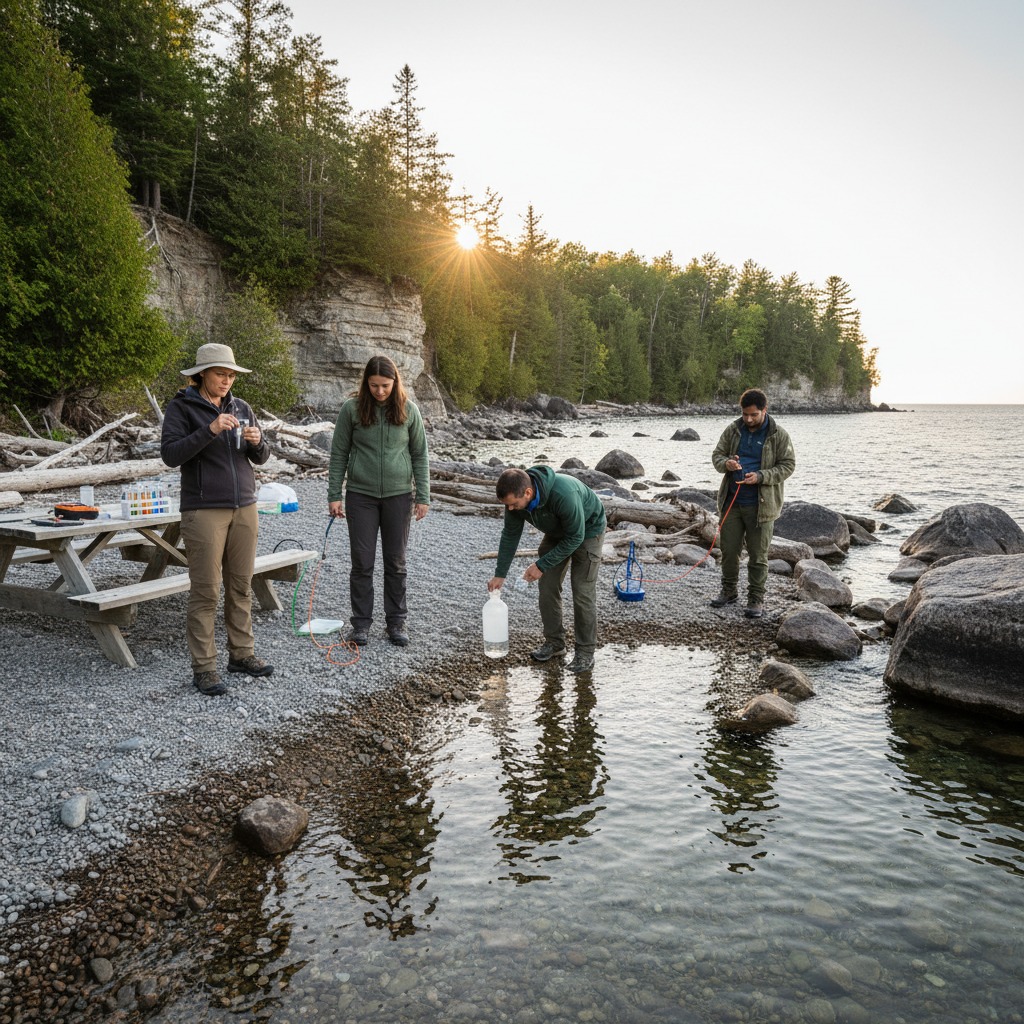
On a Saturday morning in June, a retired teacher stands knee-deep in a creek near Peterborough, holding a sampling bottle against the current. Fifty kilometres away, a cottage owner dips a Secchi disk into a Haliburton lake, recording the depth at which it disappears from sight. Near Goderich, a high school student collects benthic invertebrates from a rocky stream bottom, sorting the tiny creatures into categories that reveal the health of the waterway. None of these people are professional scientists. All of them are contributing to a body of data that is reshaping our understanding of water quality in Ontario.
Citizen science, the involvement of non-professional volunteers in scientific data collection and monitoring, has become an essential component of water quality management in Ontario. Government monitoring programs, constrained by budgets and staffing, cannot cover the thousands of lakes, rivers, and streams in the province. Volunteer monitors fill the gaps, providing data at spatial and temporal scales that would be impossible to achieve through professional monitoring alone.
The Programs
Ontario has a rich network of citizen science programs focused on water quality. The Ontario Lake Partner Program, run by the Ministry of the Environment, Conservation and Parks, is one of the longest-running and most successful. Since 1996, volunteer monitors on hundreds of Ontario lakes have been collecting water samples for phosphorus analysis and taking Secchi disk measurements of water clarity. The data collected through this program represents the most comprehensive long-term record of lake water quality in the province.
The Ontario Benthic Biomonitoring Network trains volunteers to collect and identify benthic macroinvertebrates, the tiny insects, worms, and crustaceans that live on the bottom of streams and rivers. The composition of the benthic community is a sensitive indicator of water quality because different species have different tolerances for pollution. A stream with a diverse benthic community, including pollution-sensitive species like mayflies and stoneflies, is generally healthy. A stream dominated by pollution-tolerant species like worms and midges indicates degraded conditions.
Water Rangers is a non-profit organization that provides citizen scientists with affordable, standardized test kits and a digital platform for recording and sharing their observations. Volunteers test for parameters including dissolved oxygen, pH, turbidity, and conductivity, building a real-time picture of water quality conditions across their communities. The open data platform makes the results publicly accessible, empowering communities to advocate for water quality improvements based on their own evidence.
Many conservation authorities run their own volunteer monitoring programs tailored to the specific needs of their watersheds. The Lake Simcoe Region Conservation Authority, for example, coordinates an extensive network of volunteer monitors who track phosphorus, E. coli, and other parameters at sites across the Lake Simcoe watershed. The data feeds directly into the management decisions made under the Lake Simcoe Protection Plan.
Why It Matters
The practical value of citizen science data for water quality management is substantial. The Ontario Lake Partner Program data has been used to establish baseline conditions for hundreds of lakes that would otherwise have no monitoring record, to identify trends in water quality over time, and to flag emerging problems such as increasing phosphorus levels that warrant further investigation. Without this volunteer-collected data, managers would be making decisions about lake health with far less information.
Citizen science also provides an early warning function. Volunteers who monitor their local waterway regularly are often the first to notice changes, whether it is an unusual algae bloom, a change in water clarity, or the appearance of a new species. These observations can trigger professional investigation and response that might otherwise be delayed until the problem became more severe.
Beyond the data itself, citizen science programs build community engagement and environmental literacy. Volunteers who spend time collecting samples and observing their local waterways develop a deeper understanding of the ecosystem and a personal stake in its health. They become advocates for water quality in their communities, engaging in local planning processes, supporting conservation initiatives, and influencing the behaviour of their neighbours. This social dimension of citizen science may be as valuable as the data it produces.
Challenges and Limitations
Citizen science data has limitations that must be acknowledged. Volunteers are not professional scientists, and despite training, the precision and accuracy of their measurements may not match those of laboratory analyses. Quality control and quality assurance protocols are essential to ensure that citizen science data is reliable enough to support management decisions. The best programs address this through standardized protocols, regular training, inter-calibration exercises, and statistical methods that account for measurement uncertainty.
Volunteer retention is an ongoing challenge. Many programs experience high turnover, with volunteers participating enthusiastically for a season or two and then dropping out. Maintaining long-term monitoring records requires consistent participation over years and decades, and programs must invest in volunteer engagement and recognition to sustain participation.
Funding for citizen science coordination is often precarious. While volunteers donate their time, the programs themselves require paid staff for training, equipment maintenance, data management, and quality control. Government funding for these coordination functions has been inconsistent, and many programs rely on a patchwork of grants, donations, and in-kind support that can be difficult to sustain.
Getting Involved
For anyone interested in contributing to water quality monitoring in Ontario, opportunities are abundant. The Ontario Lake Partner Program accepts new volunteers each year and provides all necessary equipment and training. Water Rangers offers accessible entry points for individuals and groups who want to start monitoring their local waterway. Conservation authorities can connect interested volunteers with monitoring programs in their watershed.
No scientific background is required. The most important qualifications are reliability, attention to detail, and a genuine interest in the health of your local waterway. The data you collect will join a growing body of evidence that is helping protect Ontario's water resources, one sample at a time.
By Maren Falk, Environment Editor