When Condos Come to the Waterfront:
Who Benefits?
The promise of revitalization meets the reality of privatized shoreline and rising costs
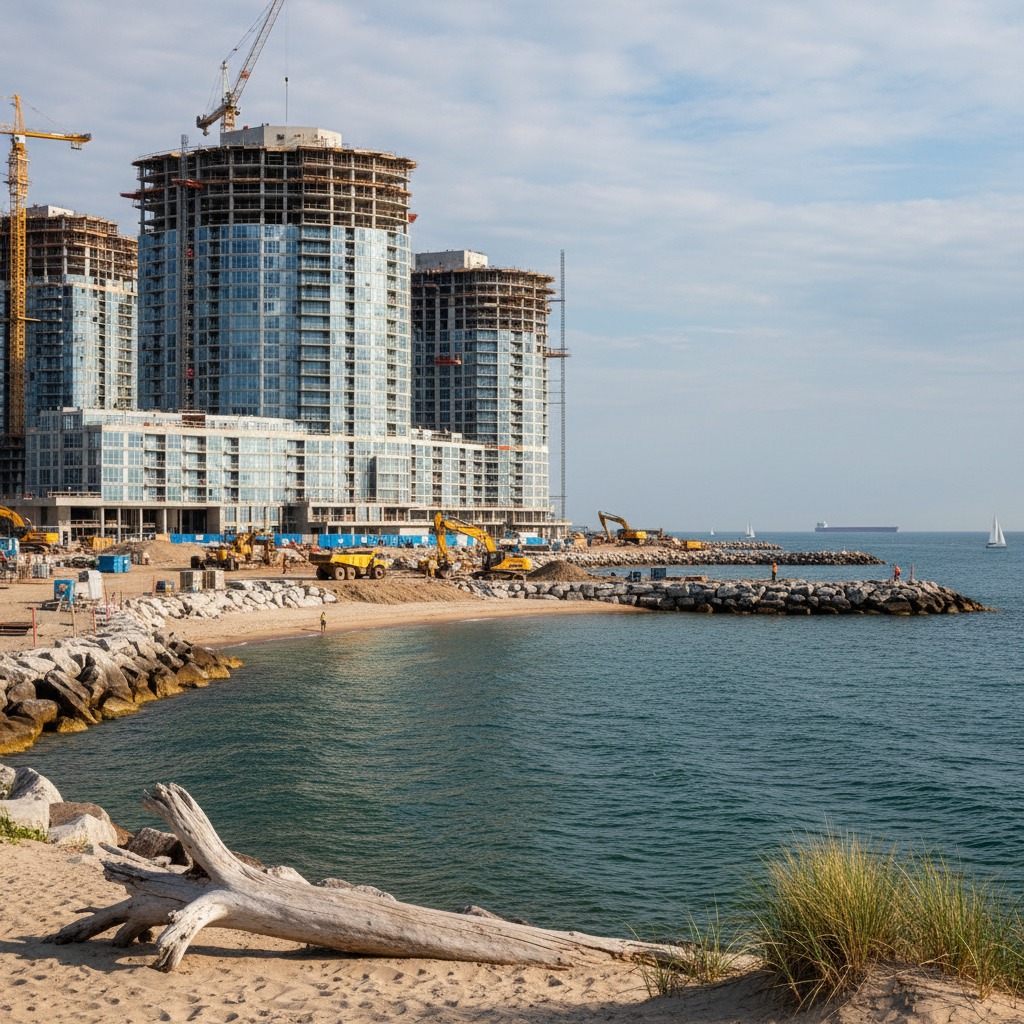
The pitch is familiar in waterfront towns across Ontario. A developer approaches the municipality with a proposal for a condominium project on an underused waterfront property: a former industrial site, an aging marina, a vacant lot near the harbour. The proposal includes attractive renderings showing sleek buildings with water views, a public promenade along the shore, ground-floor retail space, and landscaped plazas. The developer promises jobs during construction, new tax revenue for the municipality, and a revitalized waterfront that benefits everyone.
For communities that have struggled with vacant or degraded waterfront properties, the appeal is obvious. A condo development can transform an eyesore into an asset and bring investment to a town that needs it. But the track record of waterfront condo development in Ontario and elsewhere suggests that the benefits are not always as broadly shared as the proposals promise, and the costs, both visible and hidden, can be significant.
The Benefits Case
Waterfront condo developments do generate real economic benefits. Construction creates temporary employment and spending in the local economy. Completed buildings add to the municipal tax base, generating revenue that supports local services. New residents bring spending power to local businesses. In some cases, condo development has been the catalyst for broader waterfront revitalization, attracting additional investment and activity to previously neglected areas.
The public amenities that accompany many waterfront condo projects can also be valuable. Developers often agree to provide public waterfront access, trails, parks, or public art as conditions of approval. These amenities may not have existed before the development and can enhance the waterfront experience for the broader community.
The Hidden Costs
The costs of waterfront condo development are sometimes less visible but no less real. The most fundamental concern is the privatization of waterfront land. Once a condo is built on a waterfront site, that land is effectively removed from the public realm for the life of the building. Even when public access provisions are included, the character of the waterfront shifts from open and communal to controlled and private. Views that were available to everyone become the exclusive amenity of condo owners.
The promised public amenities do not always materialize as presented. Public promenades may be narrower than depicted in renderings. Retail spaces may sit empty because the rents are too high for local businesses. Park areas may be designed more as decorative features for condo marketing than as functional public spaces. Enforcement of public access provisions can be weak, and over time, condo corporations may restrict access through gates, security personnel, or posted rules that discourage public use.
Infrastructure impacts can be substantial. A waterfront condo building adds hundreds of residents to a concentrated area, increasing demand on water supply, wastewater treatment, roads, and other municipal services. The costs of upgrading infrastructure to accommodate this density may not be fully covered by development charges, leaving the broader community to subsidize the development through higher taxes or reduced service levels.
The effect on the surrounding neighbourhood is often contentious. Condo buildings can block views, cast shadows, increase traffic, and change the character of a community in ways that existing residents find objectionable. The scale and design of waterfront condos often differ dramatically from the surrounding built form, creating a visual and social disconnect between the new development and the established community.
The Planning Process
Waterfront condo proposals in Ontario typically require official plan amendments, zoning bylaw amendments, and site plan approval from the municipality. These processes include opportunities for public input, but residents often feel that the outcome is predetermined, particularly when the municipality is eager for the economic benefits the development promises. Appeals to the Ontario Land Tribunal can extend the process by months or years and impose legal costs on both sides.
Conservation authorities review waterfront condo proposals for impacts on natural hazards and environmental features. Federal review under the Fisheries Act may be triggered if the project affects fish habitat. These reviews can impose conditions that improve the project's environmental performance but do not address the broader planning questions about whether a condo development is the right use for the site in the first place.
Getting It Right
Not all waterfront condo developments are problematic. Some have genuinely revitalized neglected waterfronts, provided high-quality public spaces, and contributed to vibrant, walkable communities. The difference between a good waterfront condo project and a bad one often comes down to several factors: the quality of the public realm design, the enforceability of public access and amenity commitments, the appropriateness of the building scale relative to its context, the adequacy of infrastructure to support the added density, and the degree to which the community was genuinely involved in shaping the project.
Communities considering waterfront condo proposals should insist on robust public access provisions that are legally binding and enforceable over the long term. They should require that public amenities be delivered to a high standard and maintained at the developer's expense. They should ensure that infrastructure costs are fully accounted for. And they should ask the fundamental question that often gets lost in the excitement of a new development: is this the best use of this irreplaceable waterfront land?
By James Whitfield, Planning and Development Reporter