How Conservation Authorities Regulate
Shoreline Activity
They control what you can build, where you can dig, and how close you can get to the water, but most property owners do not understand why
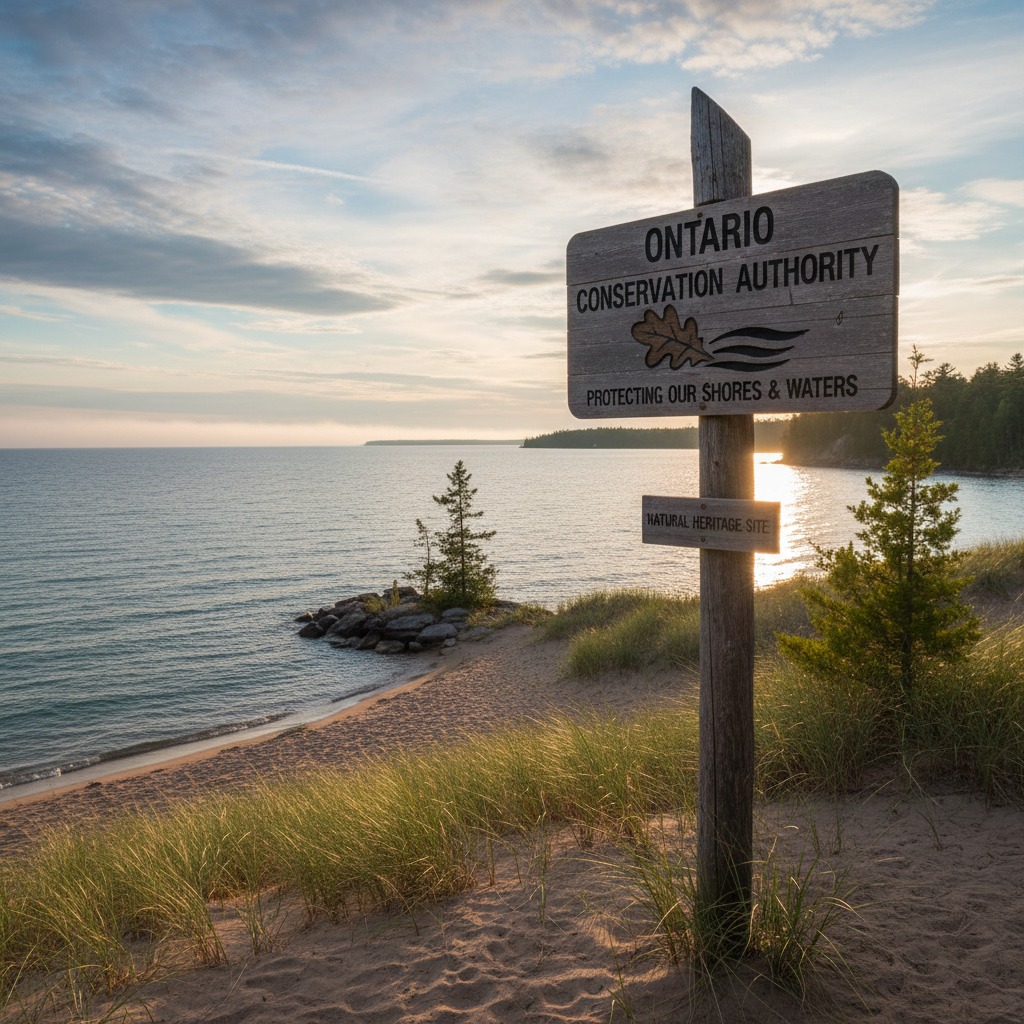
Buy a waterfront property in Ontario and you will likely encounter the local conservation authority before your first renovation is finished. Want to build a deck closer to the water? You need a permit from the conservation authority. Planning to install a new dock? The conservation authority will want to review your plans. Thinking about clearing some brush along the shoreline? That might require permission too.
For many property owners, the conservation authority is a frustrating, opaque layer of regulation that stands between them and the full enjoyment of their property. For conservation advocates, these agencies are a critical line of defense protecting hazard lands, water resources, and natural heritage from the cumulative impacts of development. The truth, as is often the case, falls somewhere in between.
What Conservation Authorities Are
Ontario has 36 conservation authorities, each governing a watershed or group of watersheds. They were created under the Conservation Authorities Act, originally passed in 1946, in response to devastating floods and erosion events that struck southern Ontario in the 1940s. Hurricane Hazel, which killed 81 people in the Toronto area in 1954, gave further impetus to their mandate.
Conservation authorities are not provincial government agencies. They are local bodies governed by boards made up of municipal councillors from the municipalities within their watershed. They are funded through a combination of municipal levies, provincial grants, and fees for services. Their primary mandate is natural hazard management, including flood control, erosion management, and the protection of life and property from natural hazards associated with water.
Over the decades, their role has expanded to include watershed planning, environmental monitoring, land stewardship, and outdoor recreation. Many conservation authorities own and manage conservation areas, trails, and nature centres. But their regulatory function, the power to control development in and around hazardous and environmentally sensitive lands, remains their most consequential and most contentious role.
The Regulatory Framework
Conservation authorities regulate development through a permitting system established under Section 28 of the Conservation Authorities Act and implemented through individual authority regulations. These regulations generally apply to activities within areas defined as hazardous lands, which include floodplains, erosion hazard zones, and areas adjacent to shorelines and watercourses. The regulated area typically extends a set distance inland from the shoreline or watercourse, often 15 to 30 metres, though it can be wider in areas with significant hazard or environmental features.
Within the regulated area, property owners must obtain a permit from the conservation authority before undertaking development activities. Development is broadly defined and includes construction or placement of buildings, site grading or alteration, and activities that change the use of the land. In practice, this means that almost any significant modification to a waterfront property, from building an addition to installing a septic system to placing fill, requires a conservation authority permit.
The permit review process typically involves an assessment of the proposed activity against the authority's policies and guidelines, which address issues such as flood risk, erosion hazard, natural heritage protection, and stormwater management. For straightforward projects like minor additions or dock installations, the review may be completed in weeks. For larger or more complex proposals, particularly those involving significant grading, wetland proximity, or hazard mitigation, the process can take months and may require engineering studies, environmental assessments, or peer review of technical reports.
Common Points of Friction
The most common source of frustration for waterfront property owners is the perceived overlap between conservation authority regulation and municipal building permits. Many owners do not understand why they need permission from two separate bodies to build on their own property. The answer is that municipal building codes address structural safety and compliance with zoning, while conservation authority regulations address natural hazard risk and environmental protection. They are different regulatory objectives applied by different agencies, and both may apply to the same project.
Timelines are another sore point. Conservation authority permit reviews are sometimes perceived as slow, particularly by property owners who are accustomed to the faster turnaround of municipal building permits. Staffing constraints, the need for technical review, and the complexity of some applications can all contribute to delays. Some conservation authorities have made efforts to streamline their processes, including establishing pre-consultation services that help applicants prepare complete submissions, but wait times remain a common complaint.
The cost of compliance can also be a concern. In addition to the permit application fee, property owners may be required to submit engineering reports, environmental impact studies, or shoreline restoration plans as conditions of approval. These professional reports can cost thousands of dollars, and for property owners undertaking relatively modest projects, the cost of compliance can feel disproportionate to the scale of the work.
Perhaps the most fundamental source of tension is philosophical. Many waterfront property owners believe that they should have the right to do what they wish on their own property, as long as they are not directly harming their neighbours. Conservation authority regulations are based on a different premise: that activities within hazard lands and near water can have consequences that extend beyond the individual property, and that a collective approach to managing those risks is necessary to protect public safety and environmental health.
Recent Changes
The Ontario government has made several changes to the Conservation Authorities Act in recent years, aimed at clarifying the role of conservation authorities and streamlining the development approval process. Amendments introduced in 2020 and 2021 narrowed the scope of conservation authority regulatory authority to focus on their core mandate of natural hazard management and limited their ability to impose conditions related to other matters such as natural heritage protection.
These changes have been welcomed by some in the development industry who saw conservation authority regulation as a barrier to housing supply. They have been criticized by environmental groups who argue that narrowing the mandate weakens protections for wetlands, woodlands, and other natural features that are connected to water and hazard management. The full implications of the changes are still playing out as conservation authorities update their regulations and policies to align with the new framework.
Working with Your Conservation Authority
For waterfront property owners, the most practical advice is to engage with the conservation authority early and often. Before purchasing a waterfront property, find out which conservation authority has jurisdiction and request information about the regulated area and any restrictions that apply to the property. Before planning any project, contact the authority for a pre-consultation to understand what permits and studies may be required.
Building a good working relationship with conservation authority staff can make the process significantly smoother. Staff are generally knowledgeable about their watersheds and genuinely interested in helping property owners find solutions that work within the regulatory framework. Coming to the table with a complete application, realistic timelines, and a willingness to accommodate environmental considerations goes a long way toward a positive outcome.
Conservation authorities exist because waterfront development in hazardous areas has real consequences, for the property owner, for neighbours, and for the environment. The regulations may be inconvenient, but they reflect hard-won lessons from decades of flooding, erosion, and environmental degradation along Ontario shorelines.
By Maren Falk, Environment Editor