Fall Fishing the Great Lakes Tributaries
When the salmon run, the tributaries come alive with some of the most exciting fishing in Ontario
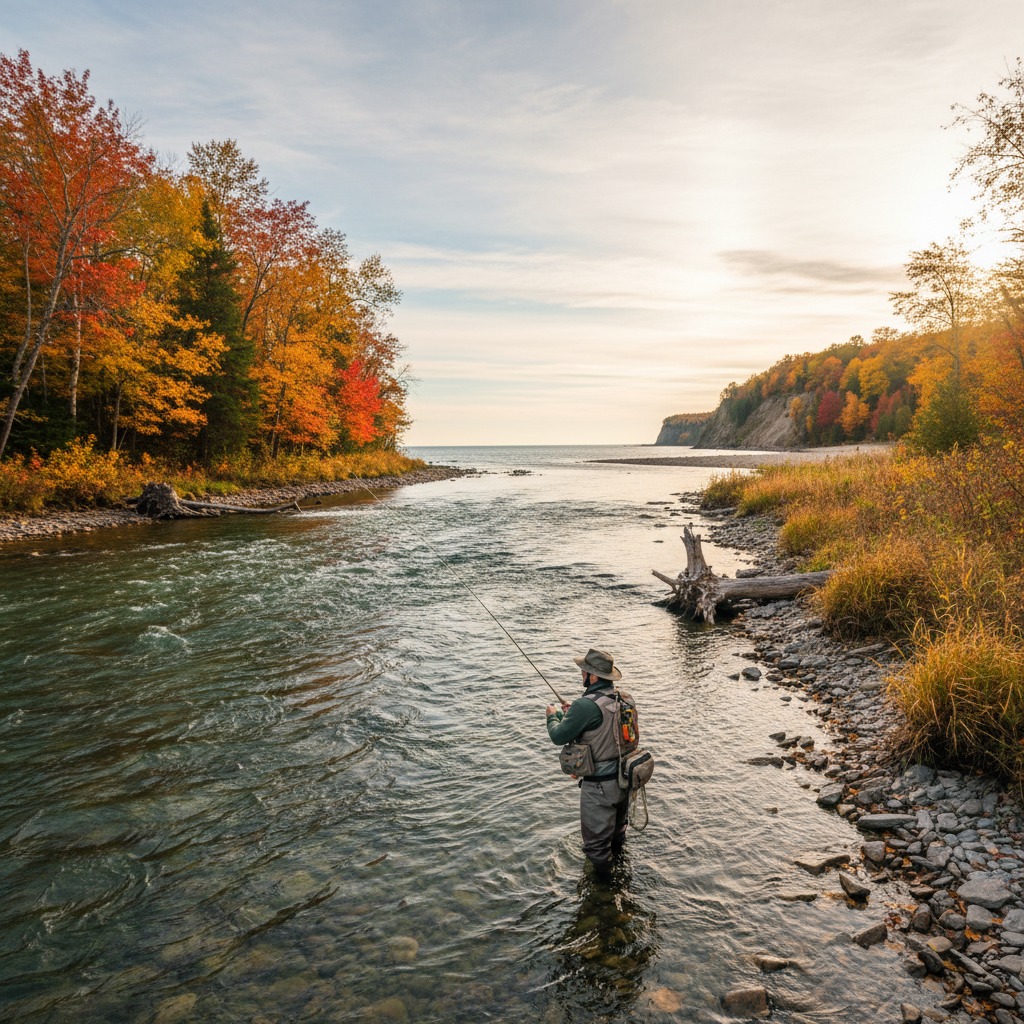
There is a moment in early October when the first chinook salmon appears in a small tributary stream, its massive body out of proportion with the shallow water, its dark back breaking the surface as it powers upstream over a gravel riffle. This is the beginning of the fall run, and for anglers across Ontario, it marks the start of the most exciting fishing season of the year.
Every autumn, salmon and steelhead leave the Great Lakes and enter the tributaries to spawn. Chinook salmon, the largest of the Pacific species introduced to the Great Lakes in the 1960s, begin their runs in September and peak in October. Coho salmon follow shortly after. Steelhead, the migratory form of rainbow trout, enter the rivers in late fall and continue through winter and into spring. Brown trout make their spawning runs in November and December. Together, these species transform otherwise modest streams into magnets for anglers from across the province.
Where to Fish
The tributaries of Lake Ontario receive the largest and most consistent salmon runs in the province. The Ganaraska River at Port Hope is one of the most famous salmon streams in Ontario, with a barrier-free run from the lake to the downtown area that concentrates fish in a short, accessible stretch. The Credit River north of Port Credit provides excellent fishing within the GTA. The Wilmot Creek at Newcastle, the Cobourg Creek, and the Bowmanville Creek all receive significant runs of salmon and steelhead.
On the Lake Erie side, the Grand River is the premier tributary, with runs of steelhead and brown trout that draw anglers from across the province. The river is large enough to absorb fishing pressure without feeling crowded, and the variety of water types from fast riffles to deep pools provides diverse fishing opportunities. The section from Brantford to Caledonia is particularly popular during the fall run.
Lake Huron tributaries, including the Saugeen River, the Maitland River, and the Bayfield River, receive good runs of salmon and steelhead. These rivers tend to be less crowded than the Lake Ontario tributaries, and the combination of river fishing with the charm of the surrounding Bruce County and Huron County communities makes them attractive destinations for a fall fishing weekend.
Techniques
The most popular technique for fall salmon fishing in Ontario tributaries is float fishing, also called centrepin fishing. This involves suspending a bait, typically a spawn sack or artificial egg imitation, beneath a float and drifting it through holding water where fish are resting. The centrepin reel, a free-spinning reel that allows the float to drift naturally with the current, is the tool of choice for most dedicated river anglers. The technique requires practice to master but is devastatingly effective when executed properly.
Fly fishing is also effective, particularly for steelhead. Swinging wet flies and streamers through pools and runs that hold fish is a traditional and visually satisfying approach. Indicator nymphing with egg patterns and stonefly imitations is another productive fly fishing technique for fall tributaries. The fall colours, the sight of large fish in clear water, and the feel of a powerful steelhead on a fly rod make this one of the most rewarding fishing experiences available in Ontario.
Spin fishing with spoons, spinners, and jigs is the most accessible approach for beginners. A medium-action spinning rod, eight to twelve pound line, and a selection of small spoons and jigs in silver, gold, and chartreuse will cover most situations. Cast upstream and retrieve the lure downstream, allowing it to tumble through the current near the bottom where fish are holding.
Ethics and Conservation
Fall tributary fishing comes with responsibilities. Spawning fish are vulnerable, and the streams they use are ecologically sensitive. Wading through spawning gravel can destroy eggs. Fighting a fish to exhaustion during the energy-intensive spawning period can be lethal even if the fish is released. Crowding into small stretches of stream creates conflict among anglers and additional stress on fish.
Ethical tributary anglers practice catch and release for wild fish, handle all fish gently and return them quickly, avoid wading on visible spawning beds, give other anglers adequate space, and follow all regulations regarding seasons, limits, and restricted areas. Some tributaries have specific regulations during the fall run, including closed sections, gear restrictions, and mandatory catch and release. Check the regulations carefully before fishing any tributary during the spawning season.
The fall run is a natural spectacle that draws anglers and non-anglers alike to the waterfront. Watching salmon leap barriers, fight their way upstream, and complete the ancient cycle of reproduction is one of the great wildlife experiences available in Ontario. Whether you fish or simply watch, the tributaries in autumn deserve your respect and your care.
By Dale Burrows, Recreation and Outdoors Writer