Shore Fishing in Ontario: Where to Go and What to Know
A boat is not required to enjoy some of the best fishing in the province
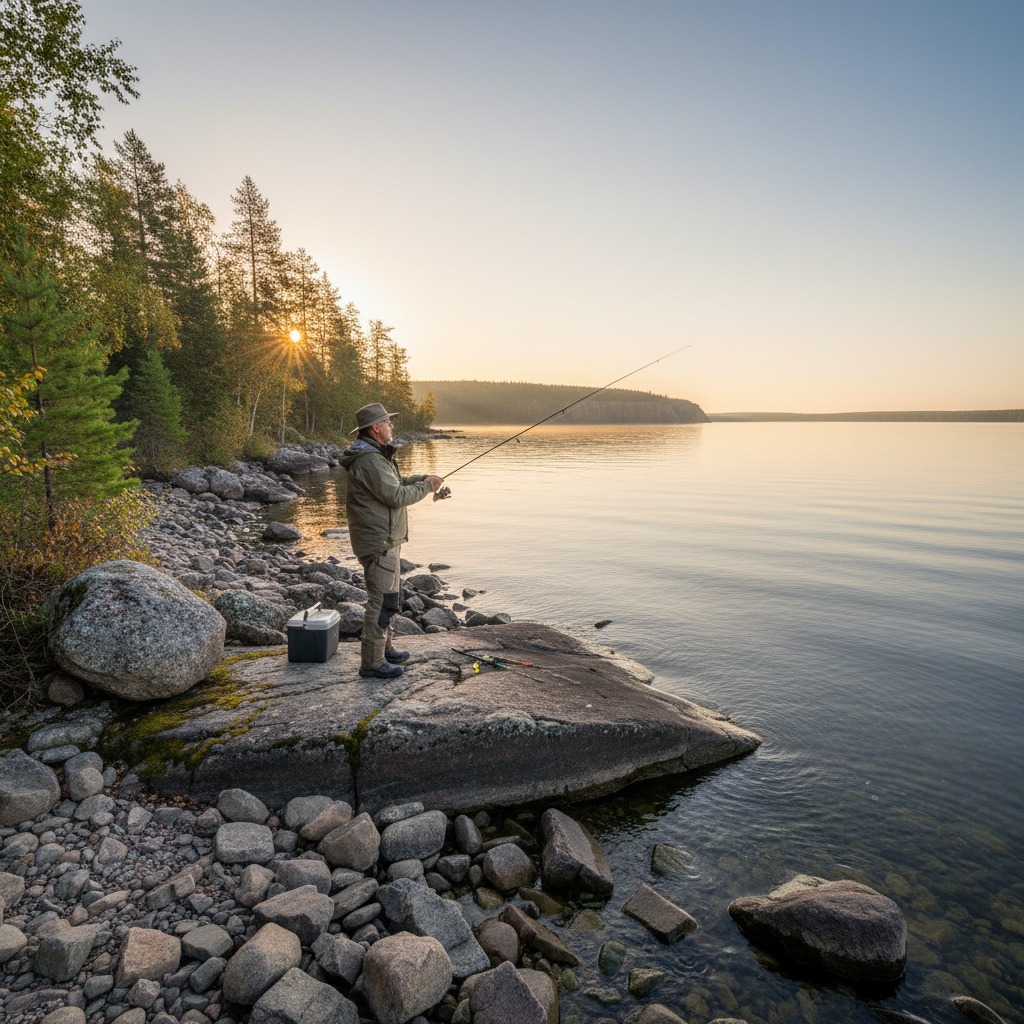
There is a persistent myth in Ontario fishing culture that you need a boat to catch fish. Spend enough time around tackle shops and fishing forums, and you would think that anything worth catching lives exclusively in deep water accessible only by a well-equipped watercraft. The reality is different. Ontario has thousands of kilometres of fishable shoreline, and the species available to shore anglers include bass, walleye, pike, perch, trout, salmon, and panfish. You do not need a boat. You need a rod, a licence, and some knowledge about where to go.
Shore fishing has several advantages beyond the obvious cost savings. You do not need to trailer and launch a boat. You do not need to worry about motor maintenance, fuel costs, or marina fees. You can fish for an hour after work or for an entire day. You can bring the kids without worrying about life jackets and boat safety. And some of the best fishing spots in the province are accessible only from shore, not from a boat.
Where to Fish
The best shore fishing in Ontario is found along the tributaries of the Great Lakes during spawning runs, at public piers and breakwaters in harbour towns, along the rocky shorelines of the Canadian Shield, and at the outflows of dams and control structures where fish congregate in the current. Each of these environments offers different species and requires different techniques, but all provide opportunities for shore anglers to catch fish consistently.
Great Lakes tributaries offer some of the most exciting shore fishing in the province. In spring, rainbow trout and steelhead run up rivers from the Great Lakes to spawn, and they can be caught from shore at accessible spots along rivers like the Ganaraska, the Credit, the Saugeen, and the Nottawasaga. In fall, chinook salmon make their spawning runs, drawing anglers to rivers across the province. The fishing can be exceptional, with fish weighing 10 to 20 kilograms available from shore.
Public piers and breakwaters provide year-round fishing opportunities in many Ontario towns. The breakwall at Port Dalhousie, the piers at Cobourg and Port Hope, the harbour walls at Goderich and Kincardine, and dozens of similar structures across the province put anglers over deep water where perch, bass, pike, and sometimes walleye and trout are within reach. Pier fishing is social, accessible, and surprisingly productive. Bring a lawn chair and a cooler, and you have everything you need for a good day.
Essential Gear
Shore fishing does not require expensive equipment. A medium-action spinning rod in the six to seven foot range is versatile enough to handle most situations you will encounter. A spinning reel loaded with eight to ten pound monofilament or fluorocarbon line is a good all-purpose choice. Add a basic tackle kit with hooks, sinkers, bobbers, a few jigs, and a selection of soft plastic baits, and you are equipped to catch most of the species available from shore.
A valid Ontario fishing licence is required for anyone over the age of 18 and can be purchased online through the ServiceOntario website. The licence includes a copy of the fishing regulations summary, which specifies the species, size limits, catch limits, and open seasons for every zone in the province. Reading and understanding these regulations before you fish is both a legal requirement and a conservation responsibility.
Techniques That Work
The most effective shore fishing technique depends on the species you are targeting and the environment you are fishing. For bass in lakes, casting soft plastic worms or jigs along shoreline structure such as docks, fallen trees, and weed edges is productive. For pike, casting spoons or spinnerbaits along weedy shorelines triggers aggressive strikes. For trout in rivers, drifting spawn sacks, small spinners, or artificial flies through pools and runs can be deadly.
Bottom fishing with live bait is a simple and effective technique for perch and walleye from piers and breakwaters. A hook, a sinker, and a worm or minnow fished on the bottom can produce steady action, particularly in the morning and evening hours. Bobber fishing with live bait is excellent for kids and beginners, as the visual excitement of watching the bobber go under keeps attention focused on the line.
The most important factor in shore fishing success is location. Fish from spots where the habitat concentrates fish, such as current breaks, depth changes, weed edges, rocky points, and structure like docks and bridge abutments. If you are not catching fish after 30 minutes, move. The willingness to walk and explore is the shore angler's greatest advantage over the boat angler who sits on one spot all day.
By Dale Burrows, Recreation and Outdoors Writer