Ice Fishing Near Shoreline Towns: A Beginner Guide
The gear, the spots, and the culture of fishing on the hard water near Ontario shoreline towns
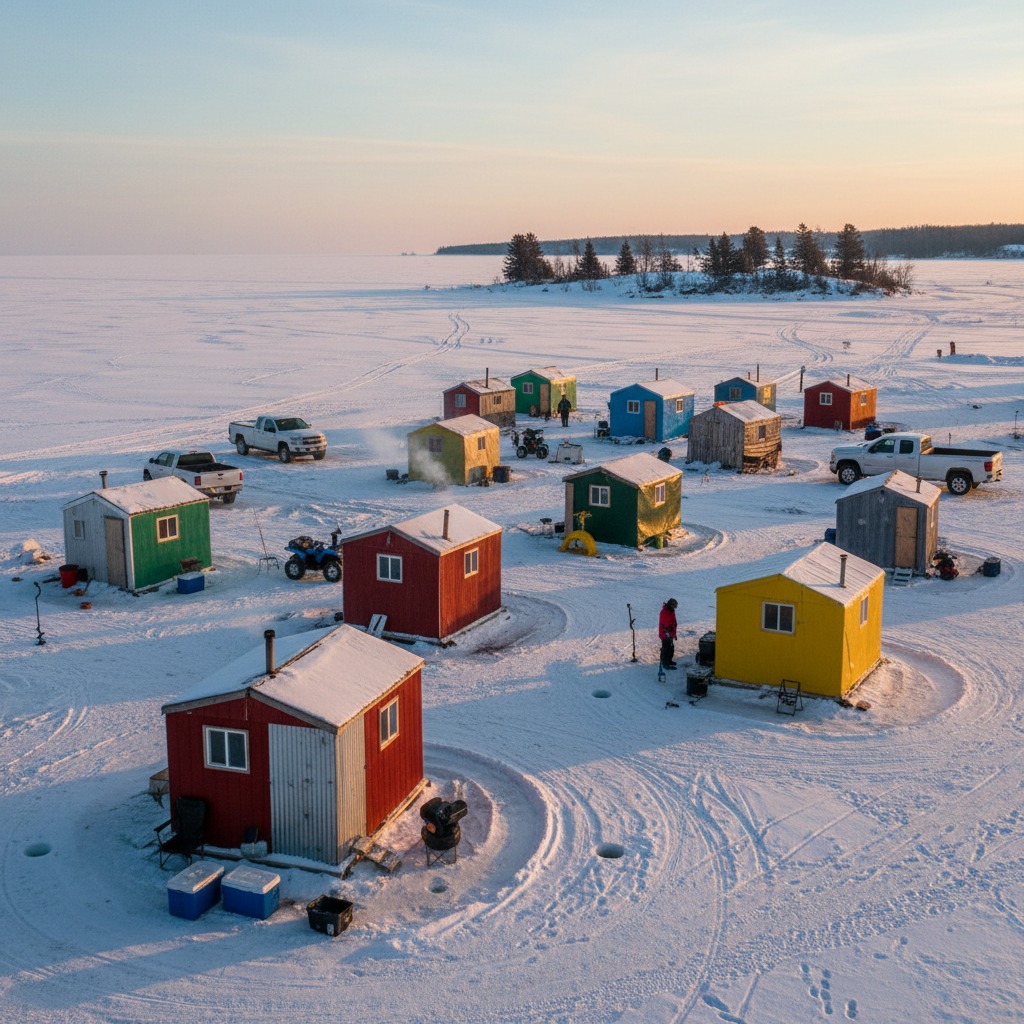
On a January Saturday on Lake Simcoe, the ice is dotted with hundreds of huts stretching across the frozen surface like a temporary village. Inside each one, an angler or a group of friends sits over a hole in the ice, jigging a lure in the dark water below, waiting for the telltale tap of a perch, pike, or lake trout. Outside, the wind cuts across the open ice, but inside the hut, a portable heater takes the edge off and the conversation flows as easily as the coffee from the thermos.
Ice fishing is one of Ontario's most popular winter activities, and the shoreline towns that service the fishery benefit from a season of business that would otherwise be dead. Bait shops, gas stations, restaurants, and hut rental operators all depend on the ice fishing economy to carry them through the months when the summer tourists are gone. For the anglers, it is not just about catching fish. It is about being on the water, even when the water is hard, and maintaining a connection to the outdoor life that drew them to the waterfront in the first place.
Getting Started
Ice fishing does not require a large investment to try. The essential equipment consists of a short ice fishing rod, a small reel spooled with light line, a selection of small jigs and spoons, a bucket to sit on and carry your gear in, an ice scoop to clear slush from your hole, and either a hand auger or access to a powered auger to drill through the ice. This basic kit can be assembled for a few hundred dollars or less, and many operators near popular fishing lakes rent equipment by the day.
A valid Ontario fishing licence is required, just as it is for open-water fishing. The same species, size, and catch limits that apply in summer apply in winter, so check the regulations for the zone you are fishing before you go. Ice fishing is open on most Ontario lakes during the winter season, but some lakes have specific regulations that restrict when and where ice fishing is permitted.
Where to Go
Lake Simcoe is the most popular ice fishing destination in Ontario, and for good reason. The lake supports excellent populations of perch, lake trout, whitefish, and herring, and the infrastructure supporting ice anglers is well developed. Communities like Beaverton, Keswick, and Orillia have bait shops, hut rental operations, and plowed roads on the ice that provide access to productive fishing areas. For a first ice fishing experience, Lake Simcoe is hard to beat because the support services make the logistics easy.
Lake Nipissing near North Bay is another premier ice fishing destination, known particularly for its walleye fishing. The lake is large and productive, and the community of Callander on its south shore has a thriving ice fishing economy. Lake of the Woods in northwestern Ontario offers outstanding ice fishing for walleye, pike, and lake trout in a wilderness setting that feels worlds away from the southern Ontario experience.
Closer to home for many Ontarians, the Bay of Quinte on Lake Ontario provides excellent walleye fishing through the ice, and the Kawartha Lakes offer perch and panfish action that is perfect for beginners and families. Many smaller inland lakes across the province also support good ice fishing, and these quieter waters offer the advantage of less crowding and a more intimate experience.
Safety on the Ice
Ice safety is the most important consideration for anyone venturing onto a frozen lake. The general rule of thumb is that a minimum of 10 centimetres of clear, solid ice is needed to support a person on foot, and 20 to 25 centimetres for a snowmobile or ATV. These are guidelines, not guarantees, and ice conditions can vary dramatically even within a small area. Current, springs, pressure cracks, and areas near inflows and outflows can create thin or unstable ice that may not be visible from the surface.
Never go on the ice alone, especially early or late in the season when conditions are most variable. Carry ice picks around your neck, which can help you pull yourself out if you break through. Tell someone where you are going and when you expect to return. Check local ice conditions with bait shops, fishing forums, or other anglers before heading out. And if conditions look or feel wrong, trust your instincts and stay off the ice. No fish is worth a life.
The Culture
Ice fishing in Ontario is as much a social activity as a fishing activity. The huts that dot the ice create a temporary community where neighbours visit, stories are told, and the bonds of shared experience are strengthened. Some ice fishing groups have been gathering on the same lake, in the same general area, for decades. The tradition passes from parents to children, and the winter lake becomes a place of connection that supplements the summer waterfront experience.
For shoreline towns, the ice fishing season extends the economic benefit of the waterfront through the winter months. It gives the community a reason to stay active and connected during the months when the dock is stored and the boat is winterized. It is a reminder that the relationship between people and water in Ontario does not end when the ice forms. It just changes shape.
By Dale Burrows, Recreation and Outdoors Writer