Invasive Species That Are Changing
Ontario Waterways
Organisms from around the world have colonized Ontario lakes and rivers, rewriting the ecological rules that native species depend on
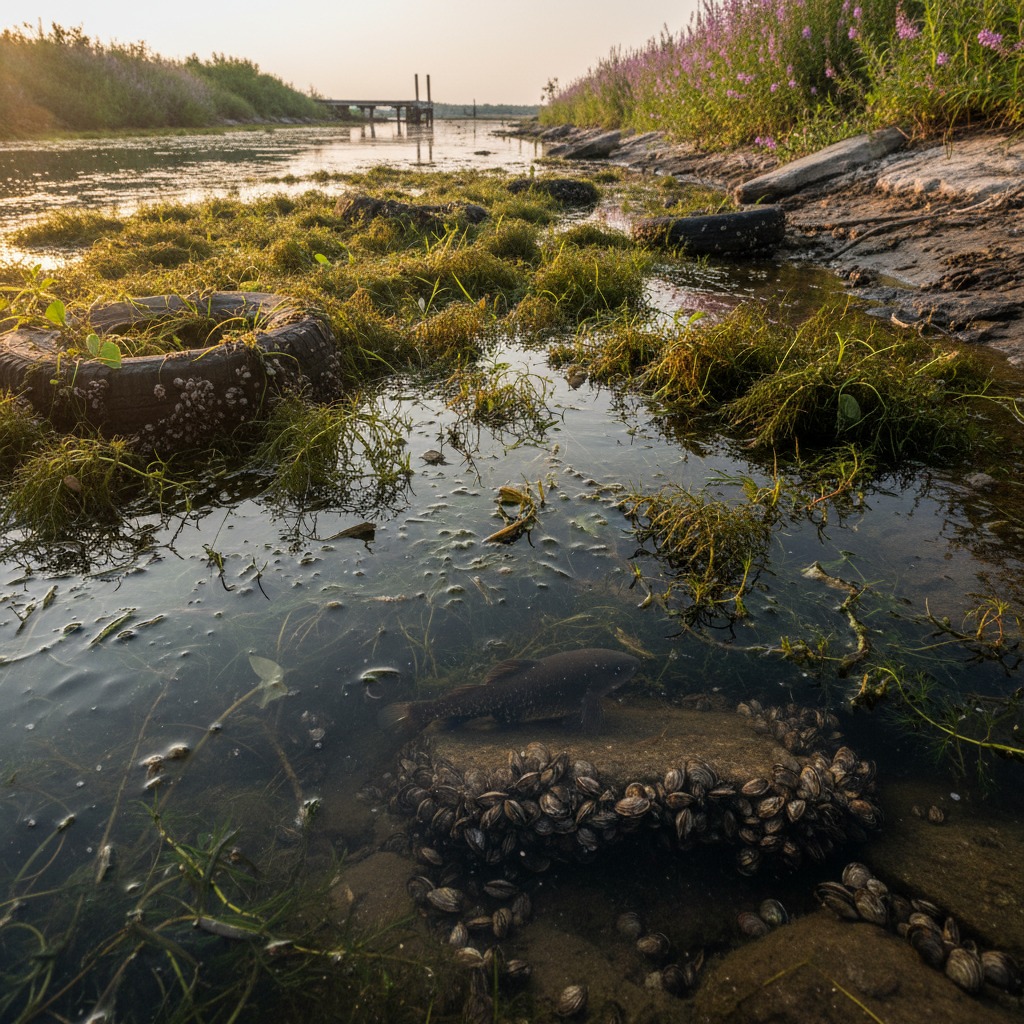
Pick up a rock along the shore of almost any Great Lake harbour in Ontario, and you will likely find it encrusted with zebra mussels. Cast a line from a pier on Lake Ontario, and there is a decent chance you will hook a round goby rather than the bass or perch you were after. Walk along a wetland edge near Lake St. Clair, and the tall grass towering over your head is probably phragmites, not a native cattail. Invasive species have become so embedded in Ontario waterways that many people no longer recognize what the natural state should look like.
The scale of biological invasion in the Great Lakes basin is staggering. More than 180 non-native species have been documented in the Great Lakes system, and new arrivals continue to be detected. Some have had transformative effects on the entire ecosystem, altering food webs, changing water clarity, smothering native species, and costing billions of dollars in economic damage. Others have more subtle impacts that researchers are still working to understand. Together, they represent one of the most significant ecological disruptions facing Ontario waterways.
How They Got Here
The Great Lakes have been receiving non-native species for over two centuries, but the rate of introduction accelerated dramatically in the 20th century. The opening of the St. Lawrence Seaway in 1959 was a turning point. The Seaway created a direct shipping corridor between the Atlantic Ocean and the heart of the continent, and oceangoing vessels brought organisms from ports around the world in their ballast water. When ships took on water in European or Asian ports and discharged it in the Great Lakes, they released larvae, juveniles, and adults of species that had never existed in these waters.
Ballast water regulations have been tightened over the past two decades, and the rate of new introductions through shipping has declined. But other pathways remain active. The aquarium and live bait trades have released species into waterways. Recreational boaters transfer organisms on hulls, trailers, and in live wells as they move between water bodies. Climate change is expanding the range of species that were previously limited by cold temperatures, allowing them to colonize waters that were once inhospitable.
The Major Players
Among the long list of invaders, several species have had outsized impacts on Ontario waterways. Zebra mussels, first detected in Lake St. Clair in 1988, and their close relatives, quagga mussels, have colonized virtually every hard surface in the Great Lakes. Their filter-feeding activity has dramatically increased water clarity in some areas, which sounds beneficial but has actually redirected energy away from the open-water food web that supports fish populations and toward the lake bottom. The result has been a restructuring of the Great Lakes ecosystem that continues to unfold.
The round goby, a small bottom-dwelling fish native to the Black and Caspian Seas, arrived in ballast water in the early 1990s and has spread throughout the Great Lakes and into many connected inland waterways. Round gobies compete aggressively with native fish for food and habitat, eat the eggs of other species, and have become the most abundant fish in many nearshore areas. Their presence has altered the diet of larger predatory fish such as smallmouth bass and lake trout, which have shifted to feeding heavily on gobies.
Sea lamprey, one of the earliest and most destructive invaders, entered the upper Great Lakes through the Welland Canal in the early 20th century. These parasitic fish attach to lake trout, whitefish, and other large species, feeding on their blood and body fluids. Sea lamprey contributed to the collapse of lake trout populations in the 1940s and 1950s and remain a persistent threat despite decades of control efforts that cost millions of dollars annually. The Sea Lamprey Control Programme, run by the binational Great Lakes Fishery Commission, has reduced sea lamprey populations by about 90 percent from their peak, but constant vigilance and ongoing treatment of spawning streams are required to maintain that suppression.
On the plant side, European phragmites has become the dominant invader in coastal wetlands across Ontario. This aggressive grass grows up to five metres tall, forms dense stands that exclude native vegetation, and reduces habitat value for wildlife. Phragmites thrives in disturbed areas and along roadsides, from which it spreads into adjacent wetlands. Control efforts involving cutting, herbicide application, and prescribed burning have had localized success, but the species continues to expand its range across the province.
Ecological Consequences
The combined impact of these and other invasive species has fundamentally altered how Ontario waterways function. The dreissenid mussels alone have changed the basic biogeochemistry of the Great Lakes, transferring energy from the water column to the lake bottom and creating conditions that favour nuisance algae growth along shorelines. This phenomenon, known as the nearshore shunt, has contributed to the fouling of beaches and water intakes with the filamentous alga Cladophora, which washes ashore in rotting mats that create odour and aesthetic problems for waterfront communities.
Native species have been displaced or suppressed across the board. Native mussels, which were already declining before the invasion, have been virtually eliminated from many areas by zebra and quagga mussels that settle on their shells and smother them. Native fish species face competition from round gobies, predation from sea lamprey, and changes in food availability driven by the mussel invasion. Wetland bird species lose habitat as phragmites converts diverse marsh vegetation into monocultures.
Control and Prevention
Once an invasive species becomes established in a large, connected water system like the Great Lakes, eradication is essentially impossible. Management efforts focus on controlling populations to reduce their impacts and preventing new species from arriving. Prevention remains the most cost-effective strategy, and regulations governing ballast water discharge, the live bait trade, and the movement of watercraft between water bodies have all been strengthened in recent years.
Ontario has implemented the Invasive Species Act, which provides a legal framework for listing and managing invasive species and prohibits the possession, transport, and release of listed organisms. Education campaigns encourage boaters to clean, drain, and dry their equipment when moving between water bodies. Inspection programs at boat launches, particularly at high-risk crossings between the Great Lakes and inland waters, aim to intercept organisms before they can spread.
Biological control is being explored for some species. Researchers have investigated the use of pheromones to disrupt sea lamprey spawning and are studying potential control agents for phragmites. Genetic technologies, including gene drive and sterile male release, are in early stages of research for some aquatic invaders, though their application remains years or decades away.
Living with Invasion
The reality is that Ontario waterways have been permanently changed by invasive species. The ecosystem that existed before the Seaway opened is not coming back. Management efforts can reduce the impacts of individual species, but the cumulative effects of more than 180 non-native organisms will continue to shape the ecology of these waters for the foreseeable future.
For the communities, anglers, paddlers, and property owners who depend on healthy waterways, the lesson is that prevention of new invasions is far more valuable than any amount of control after the fact. Every boater who cleans their equipment, every angler who does not dump their bait bucket, and every gardener who chooses native plants over invasive ornamentals is contributing to a defense that, once breached, cannot be rebuilt.
By Maren Falk, Environment Editor