Microplastics in Freshwater:
How Big Is the Problem?
They are in the lakes, in the fish, and in the drinking water, and science is still catching up to what that means
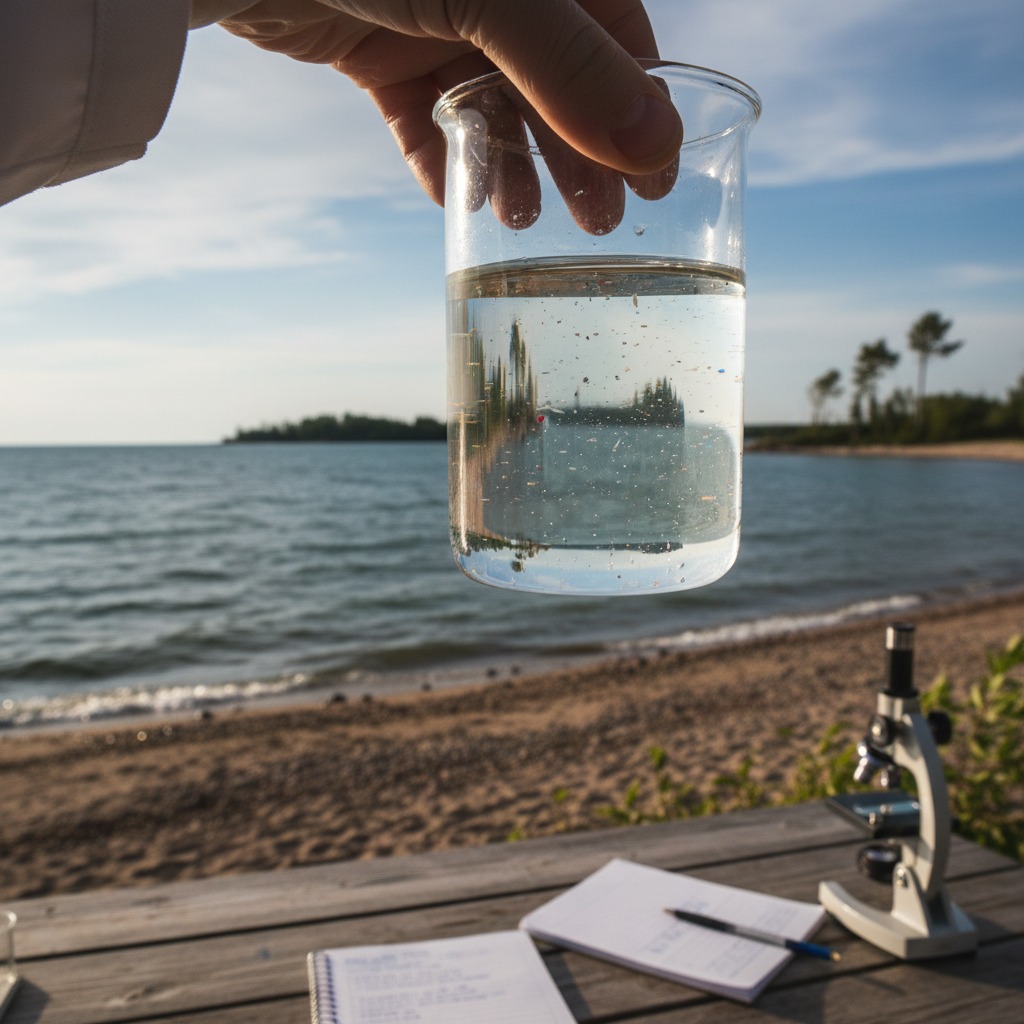
Take a fine-mesh net and tow it through the surface water of almost any Ontario lake, and when you examine the contents under a microscope, you will find plastic. Tiny fragments, fibres, beads, and films, most smaller than a grain of rice, many invisible to the naked eye. These are microplastics, defined as plastic particles smaller than five millimetres, and they have become one of the most pervasive and least understood contaminants in freshwater ecosystems worldwide.
The Great Lakes are no exception. Research over the past decade has documented microplastics in every Great Lake, in tributaries flowing into them, in the sediment on the lake bottom, in the bodies of fish and invertebrates, and in treated drinking water drawn from these sources. The concentrations vary by location, with nearshore areas and harbour zones typically showing higher levels than open water, but the contamination is effectively ubiquitous. There is no Great Lake water that is free of microplastics.
Where They Come From
Microplastics enter freshwater from a bewildering array of sources. Some are manufactured small, like the microbeads that were used in exfoliating personal care products until they were banned in Canada in 2018. Most, however, are fragments of larger plastic items that have broken down through weathering, mechanical abrasion, and ultraviolet degradation. A plastic bottle left on a beach, a discarded fishing line, a shredded plastic bag, all eventually fragment into smaller and smaller pieces that enter the water.
Synthetic clothing is a major and often overlooked source. Every time a garment made of polyester, nylon, or acrylic is washed, it sheds tiny plastic fibres. A single load of laundry can release hundreds of thousands of fibres, which pass through wastewater treatment plants and enter the receiving water. Studies of Great Lakes water have found that fibres are the most common type of microplastic, consistent with the wastewater pathway.
Wastewater treatment plants remove a large percentage of microplastics, but not all. Even plants with advanced treatment technology discharge some microplastics in their effluent. The microplastics captured during treatment end up in the biosolids, which in Ontario are often applied to agricultural land as fertilizer, creating a pathway for microplastics to enter farm fields and eventually wash into waterways during rain events.
Stormwater runoff carries microplastics from roads, where tire wear produces significant quantities of rubber particles, from construction sites, from litter, and from the general degradation of plastic products left in the outdoor environment. Road dust, which includes tire and brake wear particles along with fragments of road markings and other materials, is increasingly recognized as a significant source of microplastics to urban waterways.
What We Know About the Risks
The honest answer is that we do not yet fully understand the risks that microplastics pose to freshwater ecosystems or to human health. Research is advancing rapidly, but the science is still in its early stages, particularly regarding the long-term effects of chronic exposure at the concentrations found in the environment.
Laboratory studies have shown that microplastics can cause physical harm to aquatic organisms. Fish that ingest microplastics can experience gut inflammation, reduced feeding efficiency, and altered behaviour. Invertebrates exposed to microplastic fibres show reduced growth and reproduction. However, many of these studies used concentrations higher than those typically found in the environment, raising questions about their relevance to real-world conditions.
Perhaps more concerning than the plastic particles themselves are the chemicals associated with them. Plastics contain a cocktail of additives, including plasticizers, flame retardants, and ultraviolet stabilizers, some of which are known to be toxic or endocrine-disrupting. Microplastics can also adsorb pollutants from the surrounding water, concentrating chemicals on their surface. When an organism ingests a microplastic particle, it may be exposed to these associated chemicals at concentrations higher than those in the surrounding water.
For human health, the primary exposure pathway is through drinking water and food, including fish that have ingested microplastics. Studies have found microplastics in treated tap water drawn from Great Lakes sources, though at concentrations that current health guidelines do not consider dangerous. The World Health Organization has concluded that microplastics in drinking water do not appear to pose a health risk at current levels but has called for more research, particularly on the smallest particles that are hardest to detect and most likely to penetrate biological barriers.
The Great Lakes Picture
Research specific to the Great Lakes has provided a clearer picture of microplastic contamination in the basin. Surface water surveys have found microplastic concentrations ranging from a few thousand to over 400,000 particles per square kilometre, with the highest levels in Lake Erie and near urban centres. Lake Ontario, which receives the outflow of the upper Great Lakes along with inputs from major urban areas including Toronto and Hamilton, shows consistently elevated levels.
Sediment studies have found that microplastics accumulate on the lake bottom, particularly in depositional areas where fine particles settle. These sediment deposits represent a long-term record of microplastic contamination and a potential source of ongoing release as bottom currents and biological activity resuspend particles into the water column.
Fish surveys have found microplastics in the digestive tracts of a wide range of species, from small forage fish to large predators. The frequency of occurrence varies by species and location, but in some studies, more than 70 percent of fish examined contained at least one microplastic particle. Whether this contamination is affecting fish health at the population level remains an open question.
What Can Be Done
Addressing microplastic pollution requires action at multiple levels. Source reduction is the most effective long-term strategy. Reducing overall plastic consumption, improving waste management to prevent plastic from reaching waterways, and designing products to minimize microplastic shedding would all reduce the flow of new particles into the environment. Washing machine filters that capture synthetic fibres, improved road surface materials that reduce tire wear, and better stormwater management in urban areas are all practical interventions.
Wastewater treatment upgrades can reduce the quantity of microplastics discharged to receiving waters. Tertiary treatment technologies such as membrane filtration and advanced oxidation can remove a high percentage of microplastics, though the costs of upgrading treatment plants are substantial. In Ontario, where many smaller communities rely on secondary treatment, the gap between current capacity and what would be needed to address microplastics is significant.
Research and monitoring are essential. We need better data on the sources, pathways, concentrations, and effects of microplastics in Ontario waterways to make informed policy decisions. Standardized sampling and analytical methods are needed so that results from different studies can be compared. Long-term monitoring programs would track trends and evaluate the effectiveness of source reduction measures.
The microplastics problem is not going to be solved quickly. The plastic already in the environment will persist for decades or centuries, slowly fragmenting into smaller and smaller particles. But reducing the flow of new microplastics into Ontario waterways is both possible and necessary, and the sooner action is taken, the less contaminated our lakes and rivers will become.
By Maren Falk, Environment Editor