Native Plants for Shoreline Gardens
That Help the Ecosystem
The right plants at the water's edge do more than look good: they hold the soil, clean the water, and feed the food web
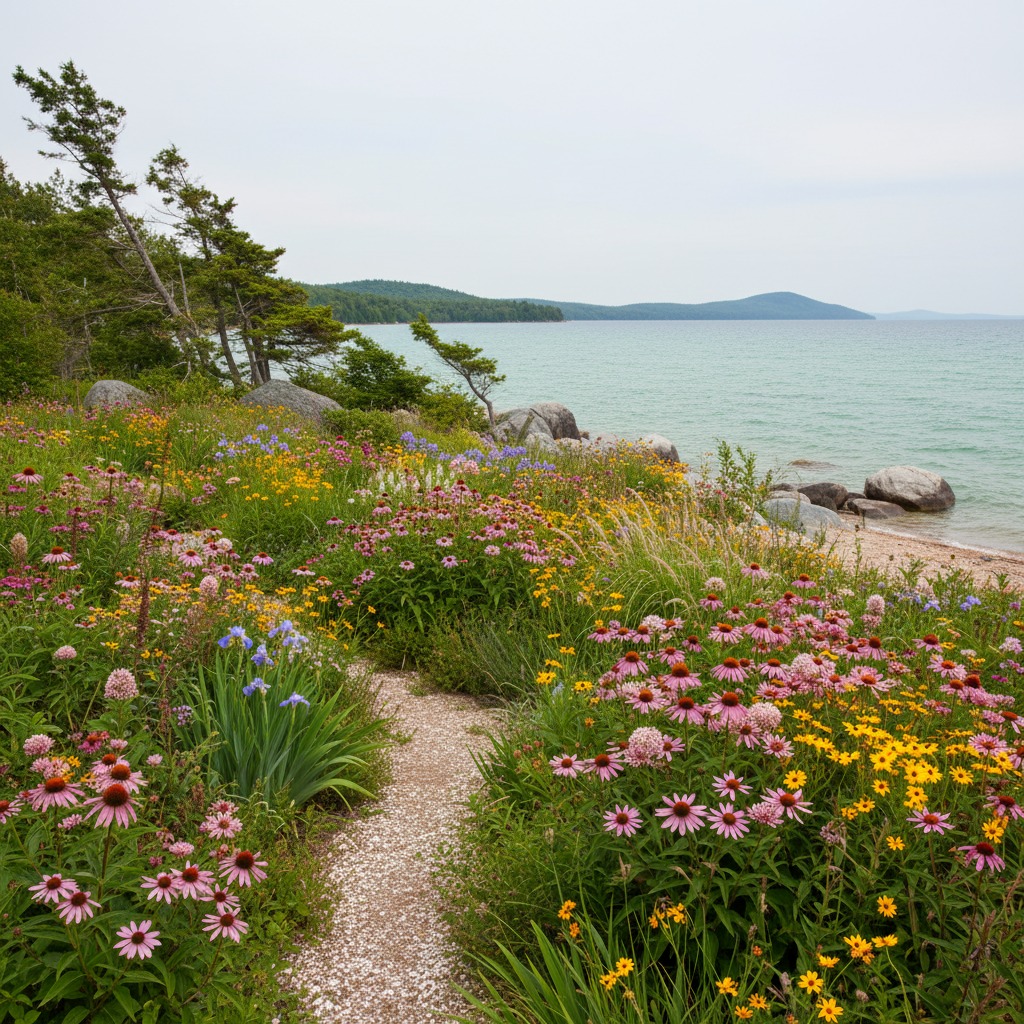
The lawn-to-water's-edge approach to shoreline landscaping has been the default for decades in Ontario cottage country and waterfront communities. It looks tidy. It provides a clear view of the water. And it does almost nothing useful for the ecosystem. In fact, it actively harms it by increasing runoff, eliminating habitat, accelerating erosion, and removing the natural filtration that protects water quality.
The alternative is a shoreline garden planted with native species, plants that evolved in Ontario's climate and soils and that work together with the local ecosystem rather than against it. A well-designed native shoreline garden provides deep roots that hold the bank together, vegetation that filters runoff and absorbs nutrients before they reach the water, flowers that support pollinators, cover that shelters birds and small mammals, and a natural aesthetic that many people find more attractive than a manicured lawn once they see it in full bloom.
Choosing the Right Species
The first step in planning a native shoreline garden is understanding the conditions on your specific site. Shoreline environments vary enormously in Ontario, from sandy lake beaches to rocky Georgian Bay shores to muddy river banks. The amount of sun, the soil type, the water level fluctuation range, and the exposure to wind and waves all influence which species will thrive.
For the zone right at the water's edge, where roots will be periodically submerged, species like blue flag iris, soft rush, lake sedge, and sweet flag are well adapted. These plants tolerate fluctuating water levels, develop dense root systems that stabilize the bank, and provide habitat for aquatic insects and amphibians. Blue flag iris produces striking purple flowers in June that are among the showiest of any native shoreline plant.
Moving slightly upslope to the moist zone that stays damp but is not regularly flooded, native shrubs like red-osier dogwood, meadowsweet, and silky dogwood provide excellent bank stabilization with their spreading root systems. These shrubs produce berries that feed birds in late summer and fall. Cardinal flower, boneset, and joe-pye weed are herbaceous perennials that thrive in moist conditions and produce flowers that attract butterflies, bees, and hummingbirds.
In the drier upland zone above the high-water mark, options include native grasses like switchgrass and big bluestem, wildflowers like black-eyed Susan, wild bergamot, and New England aster, and shrubs like elderberry and ninebark. These species establish deep root systems that prevent erosion, require no fertilizer or irrigation once established, and provide seasonal interest from spring through winter with their flowers, foliage, seed heads, and bark texture.
Design Principles
A native shoreline garden does not have to look wild or unkempt. Thoughtful design can create a landscape that is both ecologically functional and visually appealing. The key principles include planting in layers, from low ground covers near the water to taller shrubs and small trees further back, grouping plants of the same species for visual impact rather than scattering single specimens, maintaining a few clear sight lines to the water through the planting, and incorporating a defined edge, such as a stone border or a mowed path, between the garden and any adjacent lawn area.
Diversity is important for both ecological function and visual interest. A garden with 15 to 20 different species will provide blooms from May through October, support a wider range of pollinators and wildlife, and be more resilient to drought, disease, or pest pressure than a planting dominated by just a few species. The visual effect of a diverse native planting changes week by week through the growing season, which is one of its most appealing qualities.
Size matters. A buffer of native vegetation at least three metres wide along the shoreline provides meaningful ecological benefits. Five to ten metres is better. Even a one-metre strip is an improvement over lawn to the water's edge. Property owners who are reluctant to commit to a large buffer can start small and expand over time as they become comfortable with the look and learn to appreciate the results.
Establishment and Maintenance
Establishing a native shoreline garden requires more effort in the first two years than in subsequent seasons. Site preparation involves removing existing lawn or invasive species, which can be done by smothering with cardboard and mulch, by hand removal, or in some cases by careful herbicide application. Planting is best done in spring or fall when temperatures are moderate and rainfall is more reliable.
Most native plant species are available as container-grown stock from specialized native plant nurseries in Ontario. Seeds can also be used for many species, though establishment from seed takes longer and requires more intensive weed management during the first growing season. Purchasing plants from nurseries that grow from locally sourced seed stock ensures genetic adaptation to your region's conditions.
Watering during the first growing season is critical, particularly for plants installed in spring. After the first year, most native species develop root systems deep enough to sustain themselves without irrigation except during extended drought. Mulching around plants helps retain moisture, suppress weeds, and moderate soil temperature.
Ongoing maintenance is minimal once the garden is established. Annual tasks include removing any invasive species that appear, cutting back dead stems in late fall or early spring depending on personal preference and wildlife considerations, and dividing overcrowded perennials every few years. Many gardeners leave dead stems standing through winter because they provide seed for birds and shelter for overwintering insects. The garden should never be fertilized, as added nutrients defeat one of its primary purposes: filtering excess nutrients from runoff.
The Benefits Add Up
A single native shoreline garden makes a modest contribution to the overall health of a lake or river. But when multiple properties along the same waterway establish native plantings, the cumulative effect is significant. Water quality improves measurably. Erosion slows. Pollinator populations increase. Bird diversity rises. The waterway begins to function more like the ecosystem it was before development altered its edges.
Some Ontario lake associations have organized coordinated shoreline planting programs, distributing native plants to dozens of property owners around a lake and providing guidance on installation and maintenance. The results have been impressive, both ecologically and socially. Property owners discover that their native gardens attract compliments from neighbours, visits from interesting wildlife, and a sense of connection to the natural landscape that lawn never provided.
The native plants are out there, adapted and ready. The shoreline is waiting.
By Maren Falk, Environment Editor