Calm Water Paddleboard Spots in Ontario
Where to find flat water and peaceful scenery for your next paddleboard outing
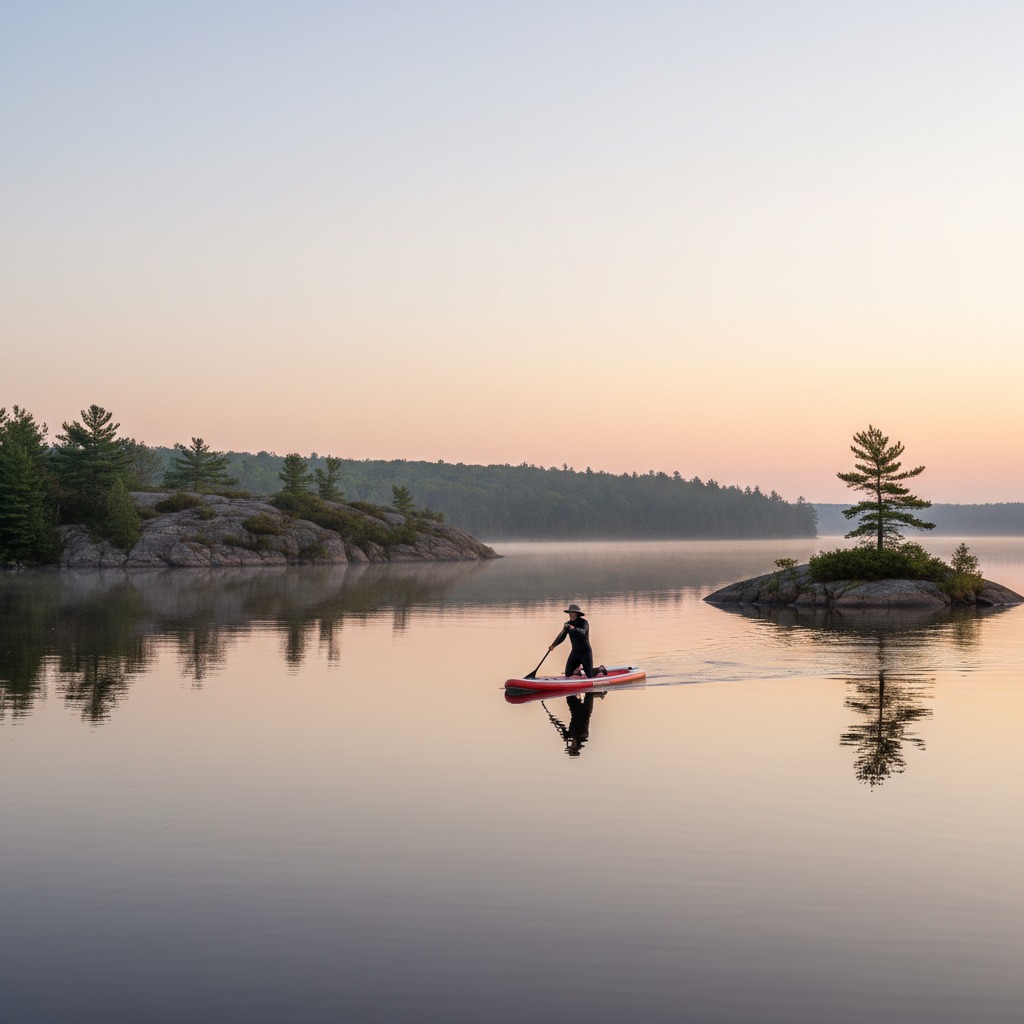
Stand-up paddleboarding has exploded in popularity across Ontario over the past several years, and it is easy to understand why. The learning curve is gentle. The equipment is relatively affordable and easy to transport, especially with inflatable boards. The exercise is excellent, working your core, legs, and balance simultaneously. And the perspective from standing on the water, elevated above the surface with a panoramic view of the shoreline, is unlike anything you get from a canoe or kayak.
The challenge for paddleboarders, especially beginners, is finding water that cooperates. SUP boards are more affected by wind and waves than canoes or kayaks because of the paddler's high centre of gravity and the board's relatively flat profile. Even moderate wind can turn a pleasant outing into an exhausting battle against whitecaps. The ideal paddleboarding conditions are calm water, light wind, and a sheltered environment that protects you from unexpected weather changes. Ontario has many such spots, and they are not all where you might expect.
The Best Calm Water Spots
Small, sheltered lakes consistently offer the calmest paddleboarding conditions in Ontario. Lakes under about 500 hectares in surface area are less likely to develop significant wind-driven waves, and those with surrounding forest or hills get additional wind protection from the terrain. The Kawartha Lakes region, Haliburton County, and Muskoka are all rich in small lakes that provide ideal SUP conditions.
River sections with slow current offer another excellent option. The backwaters and slow stretches of rivers like the Grand, the Thames, and the Otonabee provide flat water with the added interest of current and changing scenery. Early morning is the best time on rivers, when the air is still and the water surface is glass-smooth.
Protected bays on larger lakes can provide calm conditions even when the open water is rough. The inner bays of Georgian Bay, sheltered coves on Lake Simcoe, and the protected waters of the Thousand Islands all offer paddleboarding opportunities on larger water bodies. The key is knowing which direction the wind is coming from and choosing a spot that is sheltered from it.
Specific Recommendations
Baptiste Lake near Bancroft is a personal favourite. It is small enough to stay calm on most days, deep enough to have clear water, and surrounded by mixed forest that provides a beautiful backdrop. The public beach at the south end offers easy launch access and parking. Buckhorn Lake in the Kawarthas is another excellent choice, with calm water, good access, and the added attraction of the nearby Trent-Severn lock system.
For something closer to the GTA, the inner harbour at Cobourg on Lake Ontario provides sheltered flatwater within the breakwalls, with the historic town as a backdrop. Fanshawe Lake near London offers calm reservoir water with easy access from multiple points. And the sheltered bays of the Thousand Islands, accessible from Gananoque or Rockport, provide stunning scenery with calm water protected by the islands themselves.
Tips for Beginners
Start on calm water, preferably in a location where the water is shallow enough to stand in if you fall off. Most beginners fall several times before finding their balance, and knowing that the water is waist-deep rather than overhead takes the anxiety out of the learning process. Choose a board that is wide and stable rather than narrow and fast; performance can come later once your balance is established.
Always wear a PFD. It is required by Canadian regulations for stand-up paddleboards, which are classified as vessels. A belt-style inflatable PFD is comfortable and unobtrusive while providing the required flotation in case of a fall. Carry a whistle and a waterproof light if you will be out near dusk. And tell someone where you are going and when you expect to return, just as you would for any on-water activity.
Wind is the paddleboarder's greatest adversary. Check the forecast before heading out, and plan your route so that you paddle into the wind on the way out and have it at your back on the return. If conditions deteriorate while you are on the water, kneel on the board to lower your centre of gravity and reduce your wind profile. And if the wind makes it impossible to paddle back to your launch point, do not panic. Lie flat on the board and paddle with your arms, or sit and use the paddle as a kayak paddle. You will get back; it just might take longer than planned.
By Dale Burrows, Recreation and Outdoors Writer