Public vs Private: The Fight
Over Shoreline Access
Who gets to use the waterfront is one of the most heated debates in Ontario, and the law is not as clear as either side believes
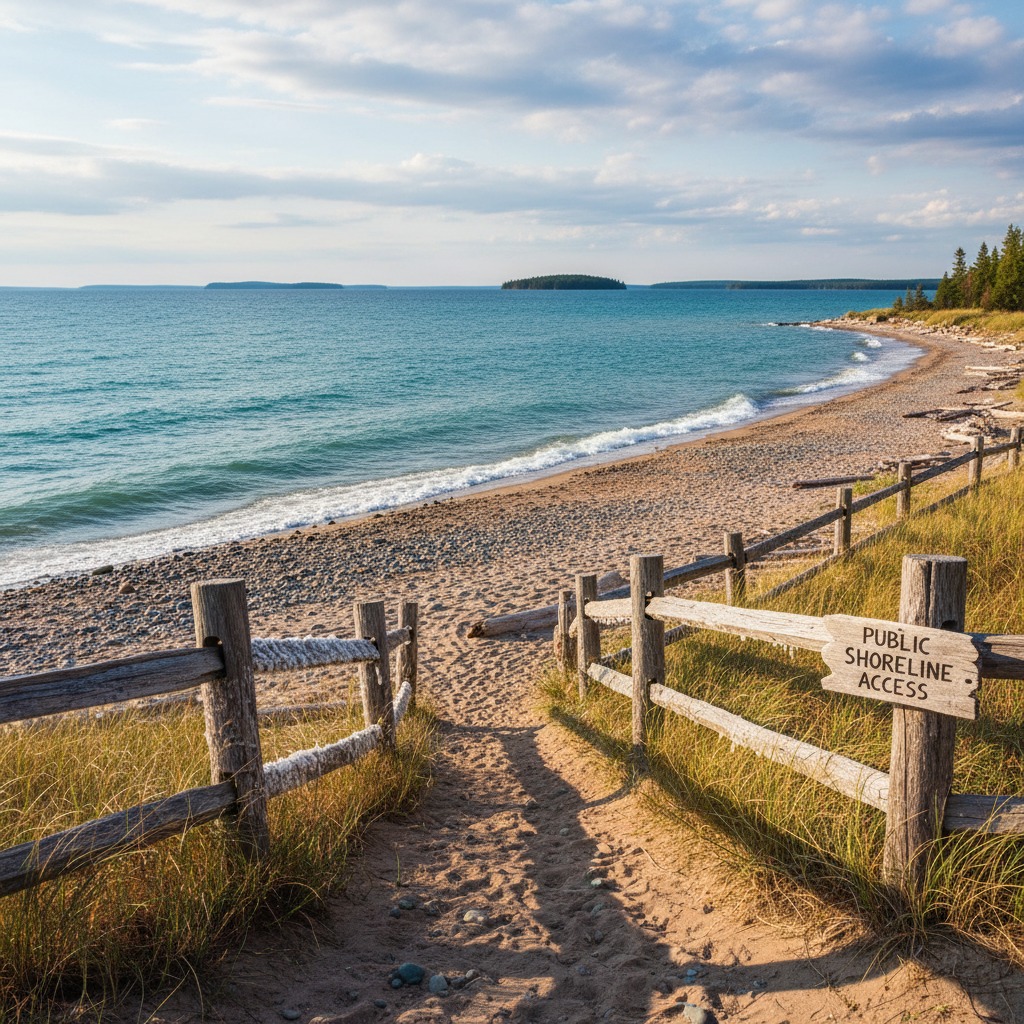
On a hot August weekend, a family carrying beach chairs and a cooler walks down a public road allowance toward a Lake Huron beach. At the end of the road, they encounter a locked gate and a sign reading "Private Property - No Trespassing." Fifty metres away, a lakefront homeowner watches from the deck, confident that the gate protects what they paid for. Both parties believe the law is on their side. In many cases, neither is entirely right.
The question of who has the right to access Ontario's shorelines touches on property law, municipal planning, historical land grants, and deeply held beliefs about the nature of public and private space. It is a fight that plays out in council chambers, courtrooms, and occasionally on the beaches themselves, and it shows no signs of being resolved anytime soon.
The Legal Landscape
In Ontario, the beds of navigable waters are generally owned by the Crown, meaning the public has a right to navigate on these waters and, in many cases, to use the land below the high-water mark. However, the adjacent upland, including the beach above the waterline, may be privately owned. This creates a confusing situation where the public may have the right to be in the water but not on the beach, or where a strip of publicly accessible land exists between private property and the water's edge, but the public does not know it is there.
Road allowances are a key element of the access debate. When Ontario was surveyed in the 19th century, many concession roads were laid out running to the water's edge, creating public right-of-way access to the shoreline. Over time, many of these road allowances were never developed as roads and were incorporated into adjacent properties by their owners. Some were formally closed and sold by municipalities. Others remain as legal rights-of-way that the public can use, even if they look like private land and have been treated as such for decades.
The resulting confusion is a major source of conflict. Property owners who have maintained and landscaped road allowances as if they were part of their property resist when the public asserts access rights. Members of the public who believe they have a right to reach the water are frustrated when they encounter barriers. Municipalities are caught in the middle, often lacking clear records of which road allowances have been closed and which remain open.
The Property Owner Perspective
Waterfront property owners in Ontario pay a premium for their location. Property taxes on waterfront homes are significantly higher than comparable inland properties, reflecting the assessed value of water access and views. From the perspective of these owners, they are paying for privacy and exclusivity, and public access to the shoreline near their property threatens both.
The concerns are practical as well as philosophical. Property owners report problems with public users who leave litter on the beach, trespass beyond the road allowance onto private property, create noise that disrupts the quiet enjoyment of waterfront living, park illegally on narrow roads, and in some cases damage vegetation or structures. These are legitimate grievances, and they fuel the desire to restrict access.
Some property owners have invested in legal battles to close public road allowances, arguing that the allowances have not been used as roads for generations and that the public has no legitimate claim to them. Others have installed gates, fences, and signage that deter public access without going through the legal process of closing the allowance. Both approaches have been challenged in court and before the Ontario Land Tribunal with varying outcomes.
The Public Access Perspective
Advocates for public waterfront access argue that Ontario's lakes and rivers are a shared resource and that all residents should be able to enjoy them, not just those who can afford waterfront property. They point out that public access points have been steadily eroding as road allowances are closed, parkland is privatized, and development blocks access to the water. In some parts of Ontario, particularly along popular lake and river shores, it is becoming increasingly difficult for the general public to legally reach the water.
The issue has equity dimensions. As waterfront property prices have risen, waterfront ownership has become concentrated among wealthier households. Without public access, lower-income residents and families are effectively locked out of the recreational and health benefits of waterfront use. This dynamic is particularly pronounced in cottage country, where seasonal residents may block access that permanent community members have used for generations.
Several Ontario municipalities have recognized this issue and taken steps to protect or expand public waterfront access. Some have inventoried their road allowances and posted signage identifying public access points. Others have acquired land for public parks and beaches. A few have adopted policies that require waterfront development proposals to include public access provisions as a condition of approval.
Finding Balance
The tension between public access and private property rights is unlikely to be fully resolved. Both interests are legitimate, and the legal framework governing shoreline access in Ontario is complex and sometimes contradictory. But there are approaches that can reduce conflict and improve outcomes for both sides.
Municipal inventories of road allowances and public access points, clearly marked and maintained, would reduce the confusion that fuels many disputes. Property owners would know what is public and what is private. The public would know where they can legally access the water. Municipalities would have a clear record to reference when disputes arise.
Design and management of public access points can address many of the concerns that property owners raise. Parking management, waste receptacles, signage about acceptable behaviour, and regular maintenance can reduce the negative impacts that unmanaged access creates. When public access points are well designed and well maintained, adjacent property owners are more likely to accept them.
Long-term, the pressure for public waterfront access will only increase as Ontario's population grows and the demand for outdoor recreation rises. Municipalities that plan proactively for this demand, protecting existing access and creating new access where possible, will serve their communities better than those that allow the erosion of public access to continue unchecked.
The waterfront belongs to everyone and to no one. Finding the right balance between public access and private property requires good faith on both sides and a willingness to accept that neither interest is absolute.
By James Whitfield, Planning and Development Reporter