Riparian Buffers: What They Are
and Why They Matter
The overlooked strip of vegetation at the water's edge is one of the hardest-working features in any watershed
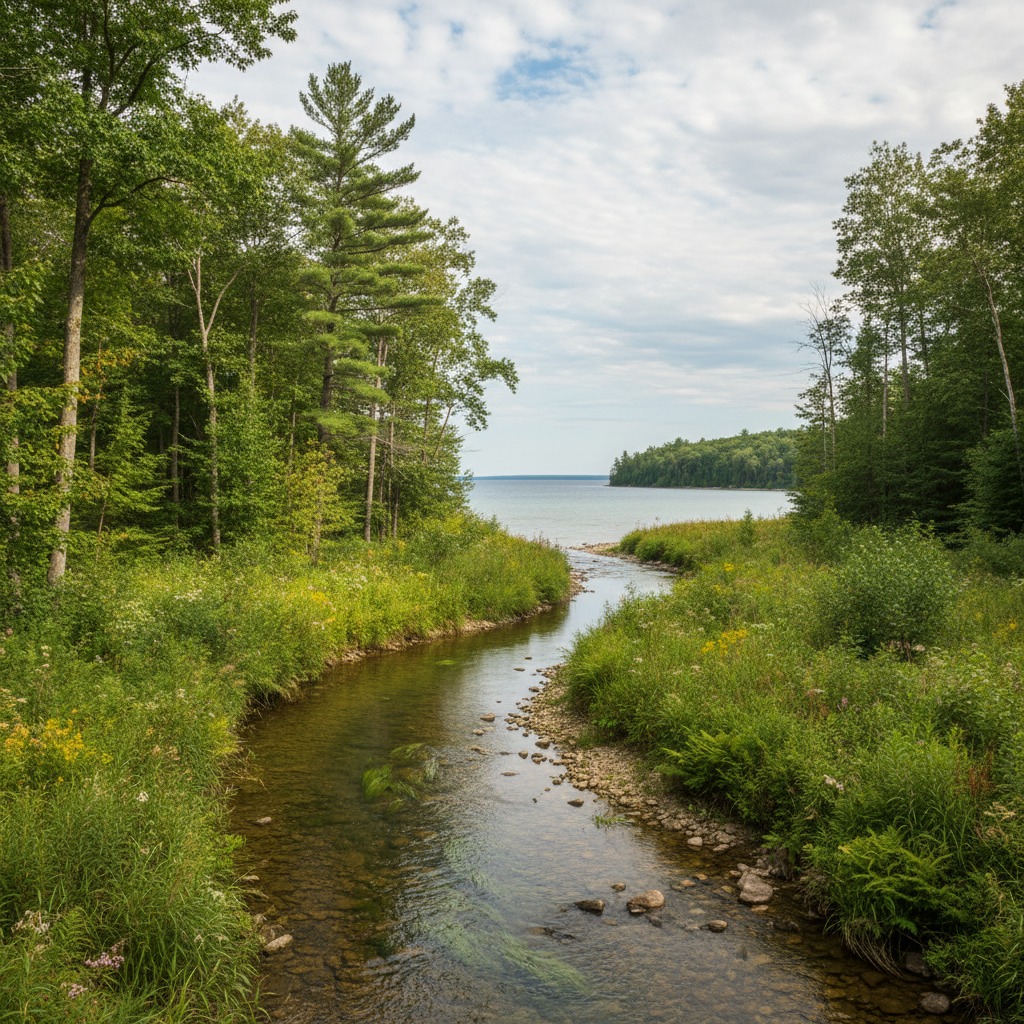
Walk along any healthy stream in Ontario, and you will notice the vegetation changes as you approach the water. Trees lean toward the light, their roots knitting the bank together. Shrubs form a dense layer between the canopy and the ground. Grasses and wildflowers grow right to the water's edge. This transition zone between the terrestrial and aquatic environments is called a riparian buffer, and it is one of the most ecologically important features in any landscape.
Riparian buffers are natural filters, stabilizers, and habitat corridors all in one. They intercept runoff before it reaches the waterway, trapping sediment and absorbing nutrients and pollutants. Their root systems hold streambanks together, preventing erosion. Their shade moderates water temperature, keeping streams cool enough for cold-water fish species. Their leaf litter feeds the aquatic food web. And they provide travel corridors for wildlife moving through fragmented landscapes.
How They Work
The filtering function of a riparian buffer operates through several mechanisms. When surface runoff flows from a field, lawn, or road toward a stream, the vegetation in the buffer slows the water down, allowing suspended sediment to settle out. The root zone acts as a biological filter, where soil microorganisms break down organic pollutants and take up excess nutrients. Deeper in the soil profile, riparian vegetation can intercept shallow groundwater contaminated with nitrate from fertilizer application, converting the nitrogen to harmless atmospheric gas through a process called denitrification.
Research across Ontario and the broader Great Lakes region has quantified the effectiveness of riparian buffers at pollutant removal. Studies have found that a 30-metre vegetated buffer can remove 50 to 90 percent of nitrogen, 50 to 85 percent of phosphorus, and 70 to 95 percent of sediment from surface runoff. Even narrower buffers provide significant benefits, with a 15-metre buffer still capturing the majority of sediment and a substantial fraction of dissolved nutrients.
The bank stabilization function is equally important. Exposed streambanks without vegetation erode rapidly, particularly during high-water events. The sediment released from eroding banks is a major source of turbidity and nutrient loading in Ontario waterways. Tree and shrub roots create a dense matrix that reinforces the bank, while the above-ground vegetation absorbs the energy of flowing water during floods. Research has shown that vegetated banks erode at rates 50 to 80 percent lower than bare or grass-only banks.
Temperature regulation by riparian shade is critical for cold-water fish species. Brook trout, the most temperature-sensitive of Ontario's native trout species, require water temperatures below about 20 degrees Celsius. On a hot summer day, direct sunlight can raise stream temperatures well above this threshold. A canopy of trees along the stream maintains shade that keeps water within the tolerable range. Studies have documented temperature increases of 5 to 10 degrees Celsius in streams where riparian shade has been removed, which can be the difference between a viable trout stream and one that can no longer support cold-water species.
The State of Ontario's Buffers
Despite their importance, riparian buffers across Ontario are in poor condition. Agricultural practices have cleared vegetation right to the water's edge along many streams to maximize cropland area. Residential and commercial development has replaced natural buffers with lawns, patios, and hardscaping. Road construction has cut through riparian corridors, fragmenting them and reducing their effectiveness. Conservation authorities estimate that less than half of the streams in intensively farmed parts of southern Ontario have adequate riparian vegetation.
The consequences are visible in the water quality data. Streams in watersheds with poor riparian cover tend to have higher concentrations of sediment, nutrients, and bacteria than those with intact buffers. They are warmer in summer, reducing their suitability for cold-water species. Their banks are more eroded, contributing additional sediment to the system. These degraded streams are less resilient to extreme weather events and less capable of supporting the diverse aquatic communities that healthy waterways sustain.
Restoring What Was Lost
The good news is that riparian buffers can be restored, and the benefits start accruing quickly. Planting trees and shrubs along a degraded stream begins stabilizing the bank within the first few growing seasons as root systems develop. Sediment and nutrient filtration improves as the vegetation matures. Temperature benefits become significant once the canopy closes over the stream, typically within five to ten years for fast-growing species like willows and silver maples.
Ontario has several programs that support riparian buffer restoration. Conservation authorities across the province offer tree planting programs that provide landowners with native trees and shrubs for streamside planting, often at no cost. The federal-provincial Agricultural Stewardship Program has funded buffer establishment on farmland. Non-profit organizations including Ontario Streams and Trees Ontario coordinate volunteer planting events and technical assistance for riparian restoration.
The most successful restoration programs combine financial incentives with technical support. Farmers are more likely to establish buffers if they receive compensation for taking land out of production, and if they have access to professional guidance on species selection, planting design, and maintenance. Programs that provide ongoing support after planting, rather than simply handing over seedlings, tend to achieve higher survival rates and better long-term outcomes.
Policy and Practice
Ontario's planning framework provides some protection for riparian buffers, but implementation is uneven. The Provincial Policy Statement requires that development maintain or improve the ecological function of the adjacent lands to significant natural features, which includes riparian areas. Many municipalities have established minimum setbacks from watercourses in their zoning bylaws, though these setbacks vary widely and are not always enforced.
Conservation authorities regulate development within a specified distance of watercourses and require maintenance of natural vegetation in many cases. However, these regulations apply primarily to new development and do not address the legacy of buffer removal that has already occurred. Restoring buffers on private land that has been farmed or developed for decades requires voluntary participation and incentive-based approaches.
The case for stronger riparian buffer protection and restoration is compelling from every angle. It benefits water quality, fisheries, flood mitigation, biodiversity, and property values along waterways. It is one of the most cost-effective environmental investments available. And it starts working from the day the first tree is planted.
By Maren Falk, Environment Editor