Road Salt Is Poisoning Our Waterways
and Nobody Talks About It
Ontario applies millions of tonnes of salt to roads every winter, and nearly all of it ends up in the water
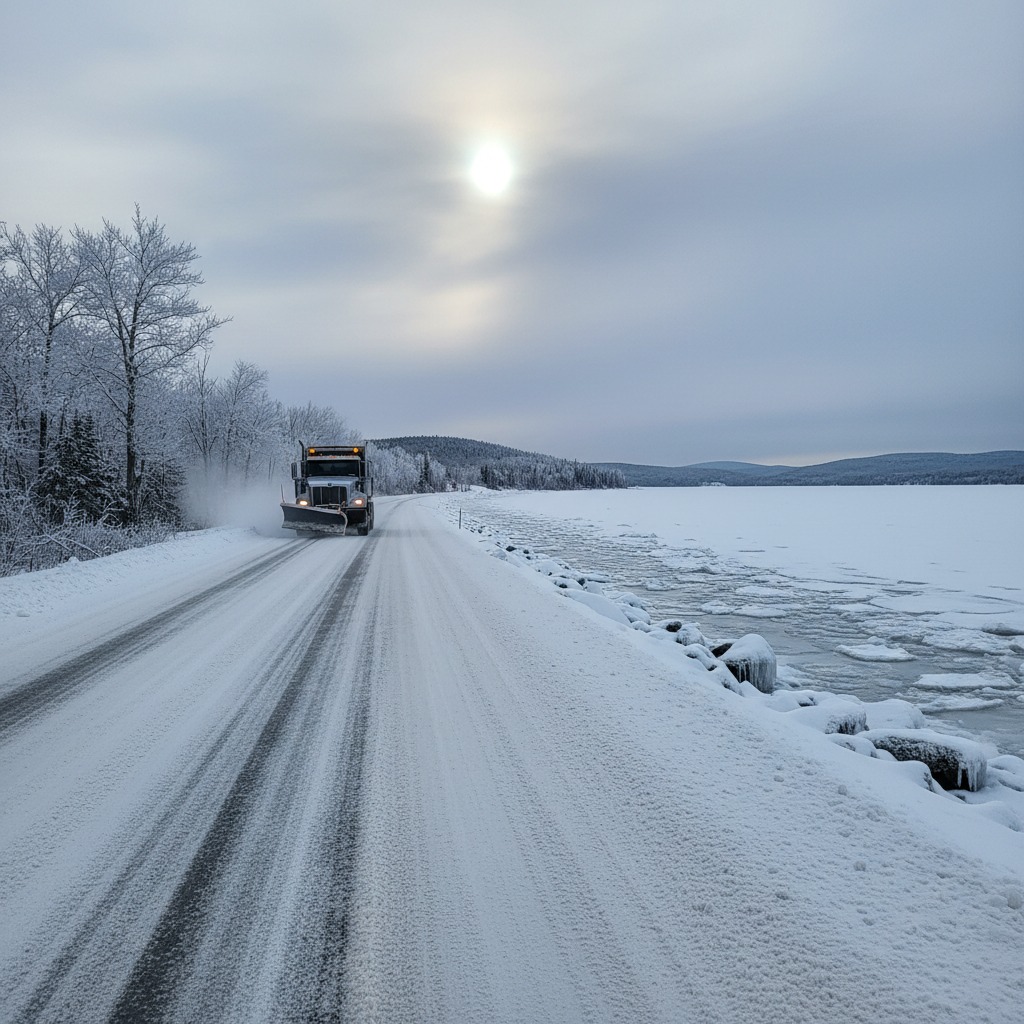
Every November, the salt trucks begin their rounds. From the 400-series highways to the smallest municipal sideroad, sodium chloride is spread liberally to keep Ontario's roads clear of ice. The salt works as intended: it lowers the freezing point of water, melts ice, and improves traction. What happens after the salt does its job on the road is where the problem begins.
Once dissolved by meltwater, road salt does not disappear. It flows into ditches, seeps into groundwater, runs into streams, and eventually reaches the lakes and rivers that communities depend on for drinking water, recreation, and ecological health. Nearly every gram of salt applied to Ontario roads ends up in the water supply. There is no mechanism that removes it. It simply accumulates, year after year, in concentrations that are rising steadily in waterways across the province.
The Scale of the Problem
Canada uses approximately five million tonnes of road salt annually, and Ontario accounts for a large share of that total. The province's dense road network, cold winters, and high traffic volumes make it one of the most salt-intensive jurisdictions in the world. Individual municipalities apply thousands of tonnes per season, and the combined total across the province is staggering.
Monitoring data from Environment and Climate Change Canada and the Ontario Ministry of the Environment shows that chloride concentrations in many southern Ontario streams have been rising for decades. Some urban streams now exceed federal water quality guidelines for chloride during spring melt periods, when the accumulated winter salt load is flushed into waterways. A few have reached concentrations that are permanently elevated above natural background levels, meaning the salt load is building up faster than the watershed can flush it out.
The problem is most severe in urban and suburban watersheds where road density is highest. Streams in the Greater Toronto Area, the Region of Waterloo, and other heavily developed parts of southern Ontario show some of the highest chloride concentrations in the province. But rural areas are not immune. Provincial highways through cottage country and agricultural regions also receive heavy salt applications, and the streams that drain these corridors show elevated chloride levels during and after winter.
Ecological Impacts
Freshwater organisms evolved in water with very low salt concentrations. Even modest increases in salinity can stress aquatic life. Research has demonstrated that elevated chloride levels affect a wide range of organisms, from algae and zooplankton at the base of the food web to fish and amphibians at the top. Sensitive species are displaced or eliminated as chloride concentrations rise, leading to a shift in community composition toward salt-tolerant species that are often less diverse and less ecologically valuable.
Amphibians are particularly vulnerable. Frogs and salamanders that breed in roadside ditches, vernal pools, and wetlands adjacent to roads are exposed to some of the highest salt concentrations in the landscape. Studies have shown that chloride levels commonly found in roadside pools during spring can be lethal to tadpoles or cause developmental deformities that reduce survival. Given that many Ontario amphibian species are already declining due to habitat loss and other stressors, the additional pressure from road salt is a serious concern.
Road salt also affects vegetation. Salt spray from passing traffic damages trees and shrubs along highways, causing dieback that is visible along Ontario's major roads. Salt-laden runoff can kill sensitive plant species in adjacent wetlands and alter the vegetation composition of roadside habitats. These vegetation changes can cascade through the ecosystem, affecting the insects, birds, and other wildlife that depend on native plant communities.
Drinking Water Implications
Rising chloride levels in surface water and groundwater are a concern for drinking water quality. While the concentrations currently found in most Ontario drinking water sources are below the aesthetic objective for chloride in the Canadian Drinking Water Quality Guidelines, the trend is upward, and some municipal wells in heavily urbanized areas have approached or exceeded guideline levels. The corrosive properties of salt-laden water can also accelerate the deterioration of water distribution infrastructure, increasing the risk of lead and copper leaching from pipes and fixtures.
Private wells near salted roads are particularly at risk. Shallow wells in areas with permeable soils can show rapid increases in chloride concentration during and after winter, as meltwater carrying dissolved salt percolates through the soil into the groundwater. Well owners in these areas may notice their water tasting salty during spring, a sign that road salt is reaching their aquifer.
Reducing the Load
The good news is that road salt use can be reduced without compromising safety. Best management practices developed through Environment Canada's Road Salt Management Program and adopted by many Ontario municipalities include calibrating salt application equipment to avoid over-application, pre-wetting salt to improve its effectiveness at lower application rates, using brine solutions that work at lower temperatures with less material, and applying salt strategically based on weather forecasts rather than on fixed schedules.
Some municipalities have achieved salt reductions of 20 to 30 percent through these practices without any increase in winter road incidents. The savings in material costs partially offset the investment in training and equipment upgrades. The environmental benefits are immediate and cumulative, as every tonne of salt not applied is a tonne that does not enter the waterway.
Private property owners and businesses also play a role. Parking lots and commercial properties are significant sources of salt loading, and many are over-salted due to liability concerns. Clear-bare policies that require every surface to be free of ice at all times lead to excessive salt application. Some Ontario municipalities are exploring safe-harbour provisions that would protect property owners from liability if they follow approved salt management practices, reducing the incentive to over-apply.
Alternatives to sodium chloride exist but have limitations. Sand provides traction without the chemical impact but does not melt ice and creates its own environmental issues. Calcium magnesium acetate and potassium acetate are effective de-icers with lower environmental impact, but they cost significantly more than salt. Beet juice and cheese brine additives can improve the performance of salt solutions at lower application rates. No single alternative is a perfect replacement, but a combination of reduced application, better practices, and selective use of alternatives can significantly reduce the salt burden on Ontario waterways.
The road salt problem is solvable, but only if we choose to solve it. The salt keeps flowing because it is cheap, effective, and the damage it causes is diffuse and slow-moving. But the accumulation is real, the trends are clear, and the ecosystems and water supplies at risk deserve better.
By Maren Falk, Environment Editor