Getting Dock Permits in Ontario: The Complete Process
Before you drive a single post into the lakebed, you need to understand which agencies have a say and what they require
Every year, waterfront property owners across Ontario set out to build, replace, or expand a dock. Many of them assume the process is straightforward. You own the land. The water is right there. How complicated can a dock be? The answer, as thousands of property owners have discovered, is very complicated indeed. Ontario's regulatory framework for dock construction involves multiple levels of government, each with its own jurisdiction, application process, and timeline. Getting it wrong can mean fines, orders to remove your new dock, or delays that cost you an entire boating season.
This guide walks through the agencies involved, the permits you may need, the types of docks and how they affect the process, common mistakes to avoid, and practical advice for getting your dock in the water without unnecessary grief. If you are planning any work on or near the water, understanding this process before you begin is not optional. It is essential.
Transport Canada and the Canadian Navigable Waters Act
Transport Canada administers the Canadian Navigable Waters Act (CNWA), which governs structures that may interfere with navigation. If your dock is on a waterway listed in the Act's schedule of navigable waters, you will likely need to submit a notice or obtain approval before construction.
In practical terms, if you are building a standard residential dock on a smaller inland lake not listed in the schedule, Transport Canada may not be a factor. If you are on a major navigable waterway such as the Trent-Severn, the Rideau Canal, or any of the Great Lakes connecting channels, expect Transport Canada involvement. The timeline for their review can range from a few weeks for simple notifications to several months for complex approvals.
Department of Fisheries and Oceans and the Fisheries Act
The Department of Fisheries and Oceans (DFO) administers the Fisheries Act, which prohibits the harmful alteration, disruption, or destruction of fish habitat. Since docks are built in or over water that fish use, DFO has a direct interest in your project.
DFO provides self-assessment tools and codes of practice that allow property owners to determine whether their project can proceed without a formal review. Projects that follow established codes of practice for dock construction, including guidelines on dock size, materials, placement, and timing of work, may not require individual DFO authorization. However, projects that fall outside these parameters, such as large docks, docks in sensitive spawning areas, or docks that involve significant in-water work, may require a formal review under the Fisheries Act.
The key factors DFO considers include the size of the dock's footprint on the lakebed, whether the dock shades fish habitat, whether construction activity will disturb spawning or nursery areas, and whether the project will alter water flow. Choosing a dock design that minimizes these impacts, such as a floating dock with a small anchor footprint, can simplify the DFO process considerably. For more on how construction activity affects aquatic ecosystems, see our article on fish habitat and shoreline development.
Conservation Authorities
Ontario's 36 conservation authorities regulate development and site alteration within their jurisdictions, which typically include the shoreline and a buffer zone extending inland. Under Ontario Regulation 97/04 (or the updated regulations under the Conservation Authorities Act), a permit is generally required for any development within the regulated area, and dock construction qualifies.
The application typically requires a site plan showing the proposed dock location, dimensions, and setbacks from property lines. For larger projects, additional technical information such as an environmental impact assessment may be required. Processing times vary: simple applications may take four to six weeks, while complex ones can take several months. Starting early and submitting a complete application is the single most effective way to avoid delays. Understanding the broader role of these agencies is covered in our piece on conservation authority shoreline rules.
Municipal Requirements
Municipal involvement varies widely. Some municipalities require building permits for permanent dock structures. Others exempt docks entirely. Zoning bylaws may specify maximum dock dimensions, setbacks from side lot lines extended into the water, and restrictions on dock type. Check with your municipal building and planning departments before you begin, as non-compliance can result in orders to modify or remove the dock. In communities with shared waterfront access, disputes over dock placement are common. Our coverage of shared waterfront access disputes explores this issue.
Types of Docks and Their Regulatory Implications
The type of dock you choose has a direct impact on the regulatory process. Generally, the less permanent and less disruptive the dock, the simpler the permitting.
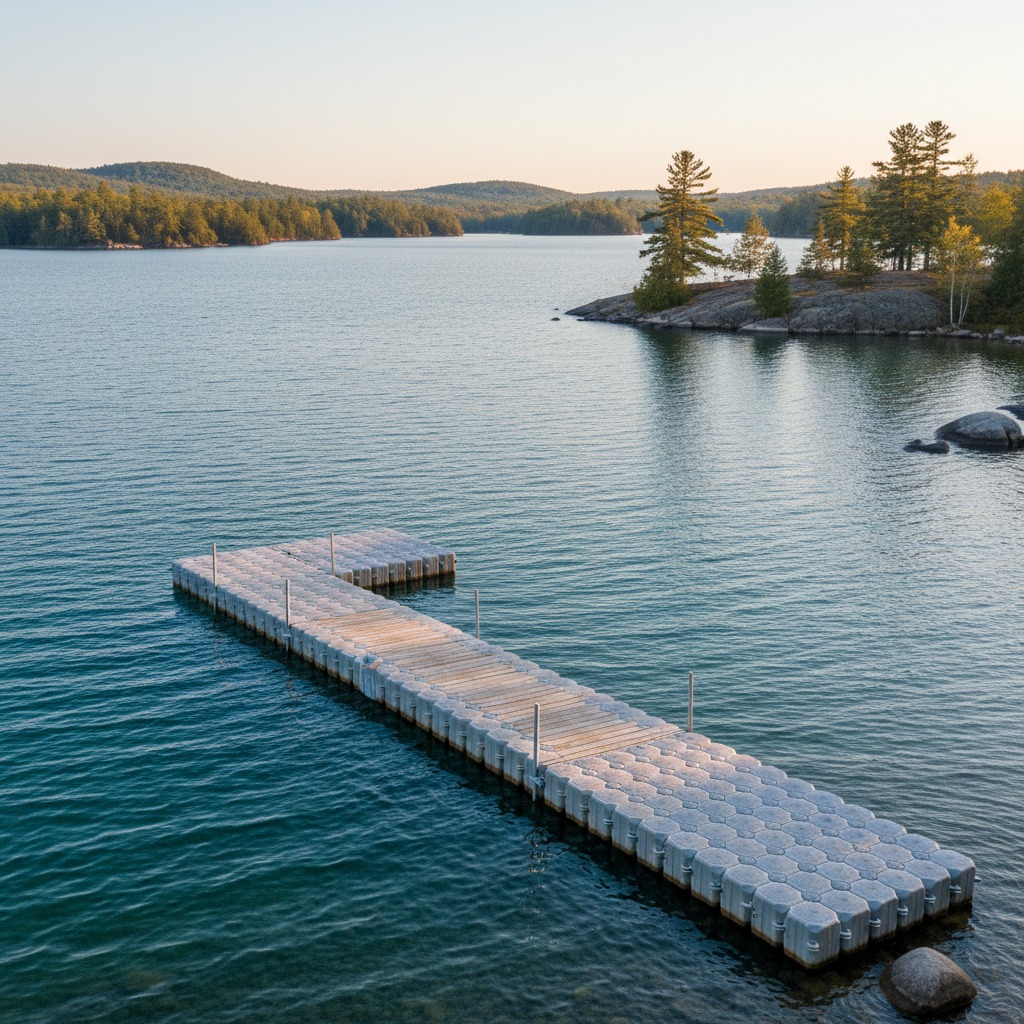
Floating docks sit on the water surface and are anchored to the bottom with cables, chains, or small anchors. They have the smallest footprint on the lakebed, allow light to pass beneath them, and can be removed seasonally. From a regulatory perspective, floating docks typically face the fewest hurdles. They cause minimal disturbance to fish habitat, do not permanently alter the lakebed, and are easy to modify or relocate if conditions change.
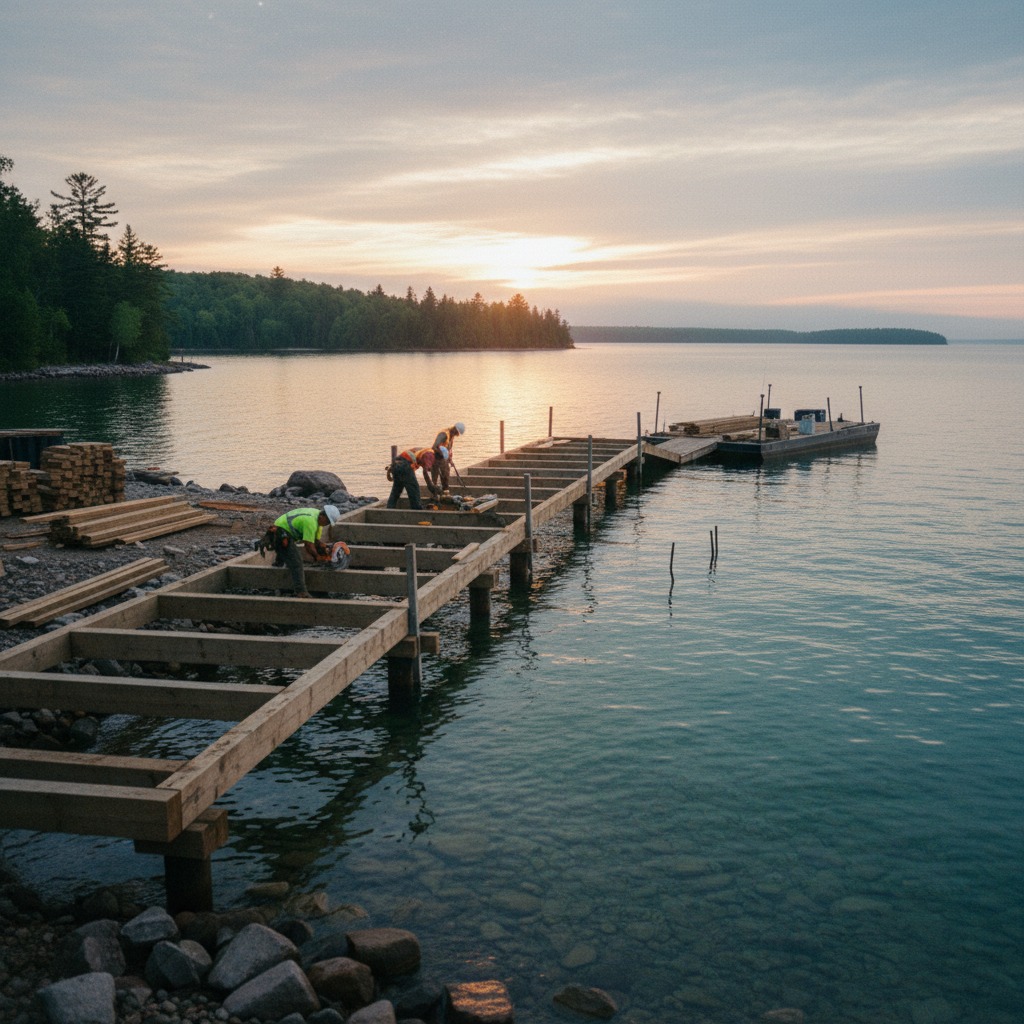
Pipe or post docks use metal or wooden posts driven or screwed into the lakebed to support a platform above the water. They involve more disturbance than floating docks because of the posts penetrating the substrate, but they provide a stable, fixed platform. Regulatory review for post docks is moderate. The number and diameter of posts, the method of installation, and the timing of work relative to fish spawning seasons are typical considerations.
Crib docks use large wooden or concrete cribs filled with rock, placed on the lakebed to support a platform. They have the greatest footprint and environmental impact. Crib docks almost always require the full suite of permits and the most detailed review from all agencies involved.
For a broader look at the financial and practical considerations of dock ownership, see our analysis of the cost of owning a dock.
Timelines: How Long the Process Actually Takes
One of the biggest mistakes property owners make is underestimating the time required to obtain permits. A realistic timeline for a straightforward residential dock on a typical inland lake, assuming no complications, looks something like this:
Conservation authority permit: four to eight weeks. DFO self-assessment or review: two to twelve weeks, depending on whether a formal review is triggered. Transport Canada notification or approval: two to sixteen weeks, if applicable. Municipal building permit: two to four weeks, if required.
These timelines run partly in parallel, since you can submit to multiple agencies simultaneously. But the total elapsed time from first application to having all approvals in hand is typically two to four months for a simple project, and six months or more for anything complex. Starting the process in January or February for a dock you want in the water by June is not excessive. Starting in April is almost certainly too late.

Common Pitfalls
Based on conversations with contractors, conservation authority staff, and property owners who have been through the process, the most common pitfalls include the following.
Building without permits. This is the most expensive mistake. Docks built without required permits may be subject to fines and removal orders. The cost of demolishing an unpermitted dock and then building a new one with proper approvals far exceeds the cost of doing it right the first time.
Incomplete applications. Missing information is the single most common cause of delays. Conservation authorities and DFO report that a significant percentage of applications are returned for additional information, adding weeks or months to the process.
Ignoring timing restrictions. Most agencies impose in-water work timing windows to protect fish spawning. In many parts of Ontario, in-water work is restricted from March through June or July. Building outside the permitted window can result in stop-work orders and penalties.
Choosing the wrong dock type. Selecting a dock style that triggers maximum regulatory scrutiny when a simpler option would serve just as well is a self-inflicted wound. Talk to your contractor about which dock types are most practical and most permittable for your specific site.
Failing to communicate with neighbours. Dock disputes between adjacent property owners are surprisingly common and can result in complaints to the municipality or conservation authority that complicate or halt your project. Discussing your plans with neighbours before you apply for permits is both courteous and strategically wise.
When to Hire a Professional
For a simple floating dock on a straightforward site, many property owners handle the permit process themselves. But if your project involves a permanent structure, a sensitive location, or a navigable waterway, hiring a professional is worth the investment. Experienced dock builders typically have relationships with the relevant agencies and understand what each one requires. The cost of professional help is modest compared to the cost of delays or enforcement actions.
The permit process for building a dock in Ontario is undeniably complex. But it exists to protect shared resources, including navigation, fish habitat, water quality, and the interests of adjacent property owners. Approaching it with patience and preparation will get your dock in the water.
By Sarah Oland, Waterfront Living Columnist