How Ontario Beach Towns Are Changing: Growth, Tourism, and Identity
From Grand Bend to Cobourg, the communities built on sand are confronting pressures that threaten to reshape them entirely
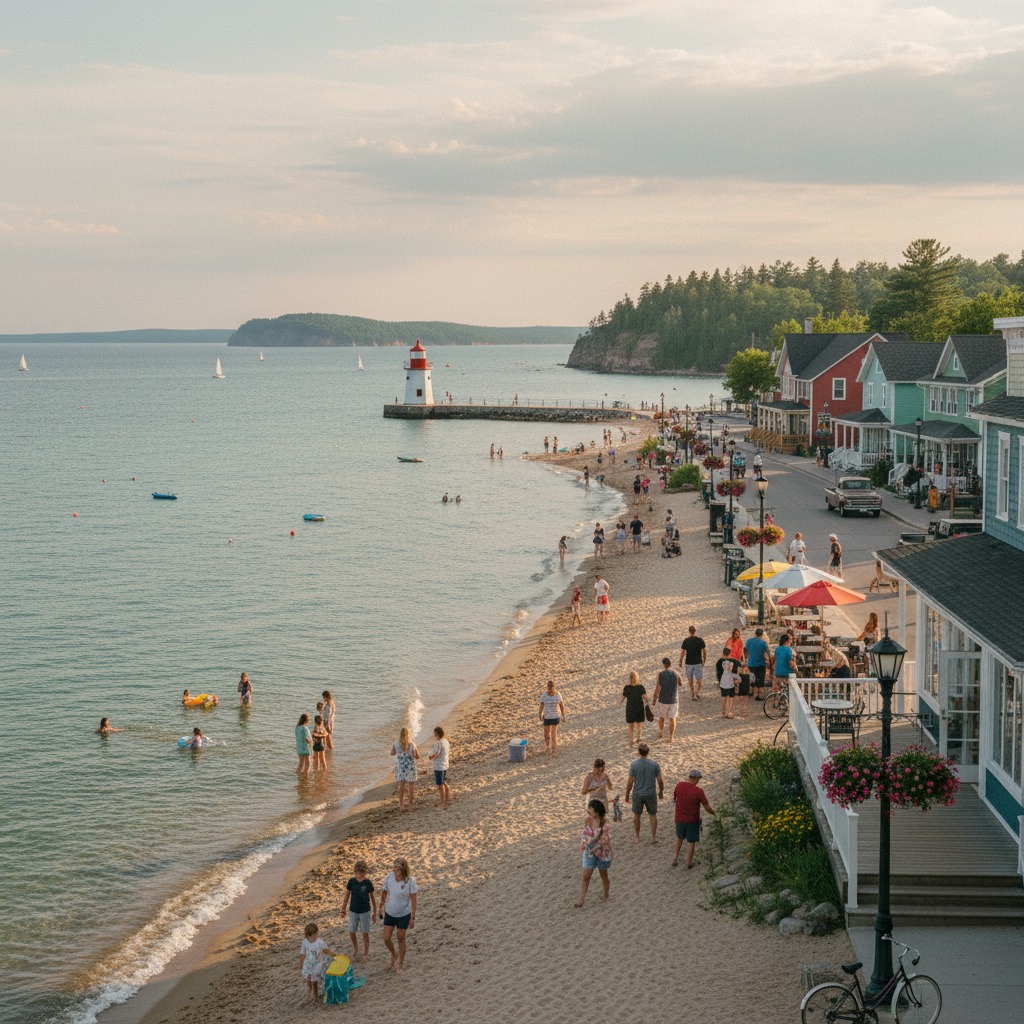
Ontario's beach towns have always been places of transition. In summer, populations swell by thousands. Quiet streets become congested corridors of sunburned visitors hauling coolers and folding chairs. Then autumn arrives, the crowds thin, and the year-round residents reclaim their communities. That seasonal rhythm defined towns like Grand Bend, Wasaga Beach, Port Elgin, Sauble Beach, and Cobourg for generations. But something has shifted in the past decade. The changes sweeping through these communities are no longer seasonal. They are permanent, structural, and in many cases deeply contentious.
Across the province, beach towns are grappling with a collision of forces: surging real estate prices, the explosion of short-term rental platforms, intensifying tourism pressure, demographic shifts driven by remote work, and municipal infrastructure that was never designed for year-round urban-scale demand. The result is a transformation that touches everything from the character of Main Street to the quality of the tap water.
Grand Bend: The Pressure of Proximity
Grand Bend, on the southeastern shore of Lake Huron, has long been one of Ontario's most popular beach destinations. Its wide sandy beach, vibrant strip of shops and restaurants, and proximity to London and Kitchener-Waterloo made it a natural draw for day-trippers and weekenders. But the town's popularity has created a set of problems that its small municipal government struggles to manage.
The most visible issue is density. On peak summer weekends, the resident population of roughly 2,000 can be dwarfed by visitor counts exceeding 30,000. Traffic on Highway 21 backs up for kilometres. Parking lots fill by mid-morning. The beach itself becomes standing-room-only in some stretches. Local business owners depend on this summer surge for their livelihoods, but residents who live on side streets off the main strip describe feeling besieged from June through September.
Short-term rentals have added a new dimension to the tension. Homes that were once occupied by families, either year-round or for the full summer season, now cycle through a rotation of weekend renters. Neighbours report noise complaints, overflowing garbage bins, and unfamiliar faces every few days. The municipality of Lambton Shores has introduced licensing requirements for short-term rentals, but enforcement remains a challenge. The economic incentive to rent a property on platforms like Airbnb for $400 or more per night in July is powerful enough to override most regulatory friction.
Beyond the rental issue, Grand Bend is experiencing a broader real estate transformation. Modest bungalows and cottages are being demolished and replaced with large, modern homes that function as both vacation properties and investment vehicles. The architectural character of the town is changing as a result, and longtime residents describe a growing sense of disconnection from the community they once knew. For more on the broader dynamics at play, see our coverage of tourism and development tension in Ontario waterfront communities.
Wasaga Beach: Growing Pains at Scale
Wasaga Beach holds a unique position among Ontario beach towns. With 14 kilometres of sandy shoreline on Nottawasaga Bay, it boasts the longest freshwater beach in the world. It is also one of the few beach towns that has grown into a substantial year-round community, with a population exceeding 25,000. That growth has brought problems of scale that smaller communities have not yet encountered.
The town's rapid residential development, particularly in subdivisions set back from the waterfront, has strained infrastructure. Wastewater treatment capacity has been a recurring concern. Road networks designed for a smaller population now carry traffic volumes that create congestion well beyond the summer months. Schools and healthcare facilities serve a population that grew faster than the services designed to support it.

At the same time, Wasaga Beach has pursued an ambitious downtown redevelopment plan aimed at transforming the beachfront area from a somewhat tired strip of seasonal businesses into a year-round mixed-use district. The plan envisions new residential buildings, improved public spaces, and a redesigned approach to beach access and parking. Proponents argue it will create a more sustainable economic base and a more appealing community. Critics worry it will price out the affordable, unpretentious character that made Wasaga Beach accessible to working-class Ontario families for decades. The debate mirrors similar conversations happening in Lake Huron communities up and down the coast.
Port Elgin and Sauble Beach: Two Neighbours, Two Approaches
Port Elgin and Sauble Beach sit roughly 30 kilometres apart on the Lake Huron shoreline of Bruce County, and their contrasting approaches to growth illustrate the choices facing beach towns across the province.
Port Elgin, part of the Town of Saugeen Shores, has embraced development more readily. New subdivisions have expanded the town's footprint. Commercial development along the highway corridor has brought chain retailers and restaurants. The town's proximity to the Bruce Power nuclear generating station provides an economic anchor that most beach towns lack, giving it a more diversified and stable employment base. The beach and waterfront remain attractive, but Port Elgin increasingly functions as a small regional centre rather than a purely seasonal destination.
Sauble Beach, by contrast, has retained more of its traditional beach-town character, in part because of geography and in part because of deliberate choices by the Municipality of South Bruce Peninsula. The town's main street still features independent shops, ice cream stands, and casual restaurants. The beach remains the undisputed centre of community life. But Sauble Beach is not immune to the forces reshaping other communities. Property values have climbed sharply. Short-term rentals have proliferated. And the annual summer influx continues to grow, placing pressure on roads, parking, water supply, and the beach itself.
One of the most contentious issues in Sauble Beach has been the management of the endangered piping plover, which nests on the beach. Efforts to protect nesting habitat have required fencing off sections of beach during the peak summer season, creating friction between conservation requirements and recreational demand. It is a microcosm of the broader tension in beach towns between preserving natural assets and accommodating the human activity those assets attract. Similar conservation and development conflicts play out in communities featured in our look at fish habitat and shoreline development.
Cobourg: Reinvention on Lake Ontario
Cobourg, on the north shore of Lake Ontario roughly midway between Toronto and Kingston, represents a different category of beach town. Unlike the Lake Huron communities that are primarily summer destinations, Cobourg is a year-round town of about 20,000 with a diversified economy, a well-preserved historic downtown, and a waterfront that has been the focus of significant public investment.
Victoria Park Beach, the wide sandy beach at the centre of town, draws large summer crowds and hosts events including a major sandcastle festival. The adjacent Victoria Park, with its heritage bandshell and mature trees, provides a green buffer between the beach and the downtown. The harbour accommodates both recreational boaters and a small commercial fishing fleet. The overall effect is a waterfront that feels integrated into the community rather than separate from it.

But Cobourg is also experiencing the population shift that is remaking many Ontario communities within commuting distance, or remote-working distance, of Toronto. New residents drawn by lower housing costs, the appeal of a small-town waterfront lifestyle, and the flexibility of remote work are changing the demographic profile of the community. Local real estate prices have risen accordingly. The challenge for Cobourg, as for other towns in this position, is to absorb growth without losing the qualities that attracted newcomers in the first place. Understanding waterfront property value myths is useful context for anyone considering a move to towns like these.
The Cultural Transformation
Beneath the visible changes in real estate and infrastructure lies a deeper cultural transformation. Beach towns in Ontario were historically unpretentious places. They were destinations for families of modest means who wanted a week or a weekend at the lake. The cottages were small. The entertainment was simple. The social atmosphere was casual and inclusive.
That culture is eroding. As property values climb, the demographic of both residents and visitors shifts upward economically. The modest cottage becomes a luxury vacation rental. The family-run chip stand becomes an artisan food truck. The free public beach acquires a paid parking lot that effectively charges admission. None of these changes is inherently negative, but collectively they alter the character and accessibility of communities that were once defined by their openness to everyone.
Some communities are pushing back. Municipal short-term rental bylaws, height restrictions on new construction, investments in public beach access and facilities, and zoning that preserves affordable housing stock are all tools being used to manage the pace and direction of change. Whether these measures will be sufficient to preserve the essential character of Ontario's beach towns remains an open question. The forces driving transformation, including demographic change, housing economics, and the sheer popularity of waterfront living, show no signs of weakening. For a broader look at how Ontario communities are managing public access amid these shifts, see our guide to public waterfront access.
What is clear is that the beach towns Ontario knew in the twentieth century are becoming something different. The sand and the water remain, but the communities built around them are evolving in ways that will determine whether these places continue to serve as accessible, welcoming destinations for the broad public, or become enclaves of privilege that happen to sit beside a beautiful stretch of shore.
By James Whitfield, Planning and Development Reporter