Cottage Waterfront vs Town Waterfront: The Differences That Matter
Two versions of waterfront life with trade-offs that go far beyond the price tag
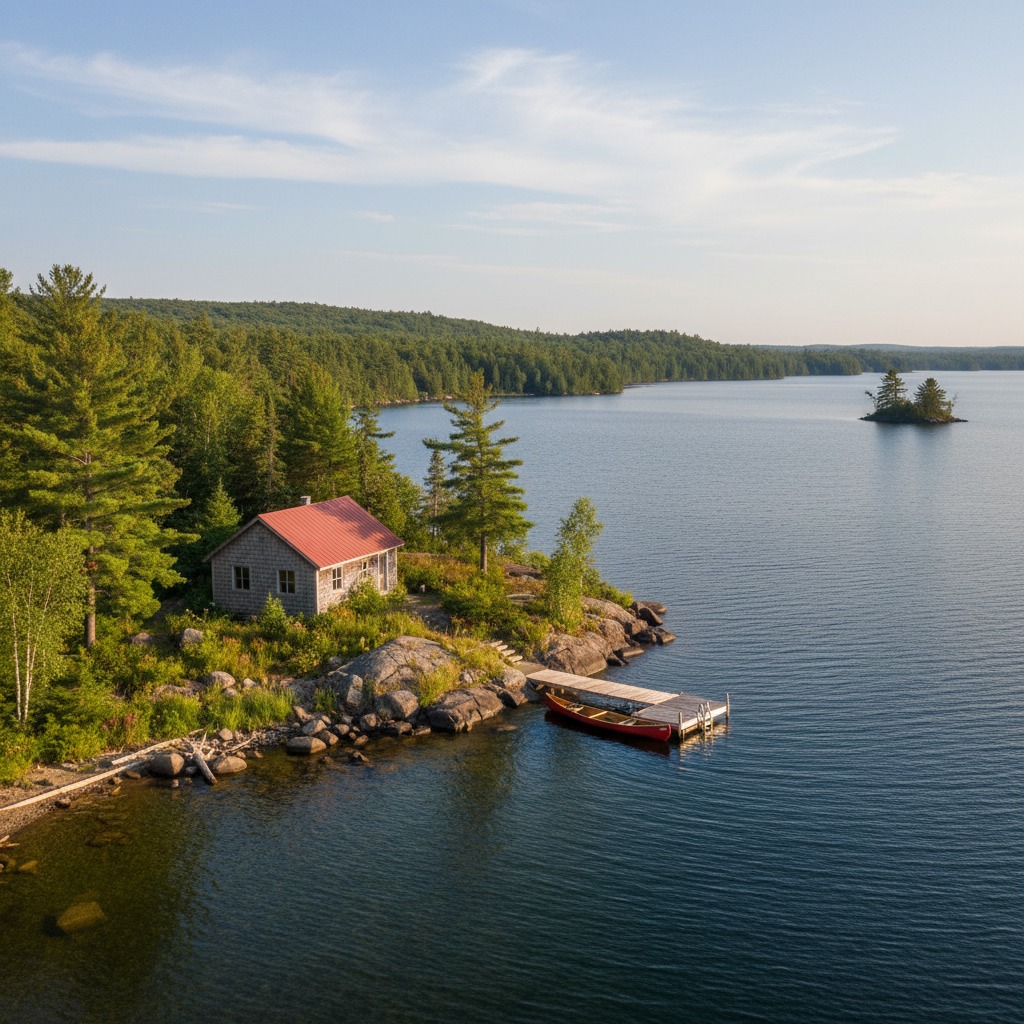
When people say they want waterfront property in Ontario, they usually mean one of two things. Either they picture a cottage on a quiet lake, surrounded by trees, with a dock and a canoe and nothing but loon calls for evening entertainment. Or they picture a house in a lakeside or harbour town, walking distance to shops and restaurants, with a waterfront park down the street and neighbours within waving distance. Both are waterfront. Both are appealing. But they are fundamentally different experiences with different costs, different challenges, and different rewards.
The distinction matters enormously for buyers, and the failure to understand it is one of the most common sources of disappointment in waterfront real estate. People buy the wrong type of waterfront for their personality, their stage of life, or their practical needs, and they discover the mismatch only after the closing papers are signed. Understanding the real differences before you commit can save money, frustration, and the painful experience of learning that the waterfront life you imagined does not match the waterfront life you purchased.
Cottage Waterfront: The Private Retreat
Cottage waterfront in Ontario typically means a property on a lake in the Canadian Shield, the near-north, or one of the cottage country regions that stretch from the Kawartha Highlands through Muskoka to Georgian Bay and beyond. The property is usually accessed by a rural road that may or may not be maintained to a high standard, and in some cases may not be plowed in winter at all. Services come from a private well and a septic system rather than municipal water and sewer. The nearest town, depending on the location, might be 20 minutes away or an hour.
The appeal is the escape. The quiet, the dark skies, the immersion in nature, the sense of having your own piece of the shoreline where the water laps against rocks that belong to you and the only sound at night is wind through the pines. Cottage waterfront offers a level of privacy and natural setting that town waterfront simply cannot replicate. For many Ontarians, this is the defining image of the good life, the place where you become the best version of yourself.
The trade-offs, however, are substantial and relentlessly practical. Services are distant. Groceries, hardware, medical care, and virtually everything else you take for granted in an urban environment require a drive that can be 20 to 60 minutes each way depending on the location. Internet and cell service may be limited or unreliable, though satellite internet options have improved significantly in recent years. Maintenance falls entirely on the owner, and the property is exposed to hazards including storms, fallen trees, wildlife damage, and the general accelerated wear that comes from a building sitting in a harsh natural environment.
The costs of cottage waterfront extend well beyond the purchase price. Annual road maintenance fees, where the road is privately maintained, can run $1,000 to $3,000 per year. Well water testing and septic system maintenance are the owner's responsibility and cost. Dock installation and removal, boat storage, and shoreline upkeep add more. Insurance premiums reflect the remoteness, the distance from fire services, and the exposure to natural hazards. For a seasonal cottage used primarily from May to October, the annual carrying cost beyond the mortgage routinely reaches $10,000 to $20,000. Converting a cottage to year-round use involves additional investment in insulation, heating, road access, and potentially upgrading the well and septic systems.

Town Waterfront: Community on the Shore
Town waterfront means a property within a municipality, typically on municipal water and sewer, on a paved and plowed year-round road, and within walking or short driving distance of services. Ontario's waterfront towns range from small communities like Port Elgin, Cobourg, and Goderich to larger centres like Collingwood, Kingston, and the Niagara lakefront communities. The waterfront may be a Great Lake, an inland lake, a river, or a harbour. The property may have direct water access with its own shoreline, or it may rely on nearby public waterfront access.
The advantages are convenience and infrastructure. You have reliable municipal services, professionally maintained roads, nearby shopping and dining, medical care within reasonable distance, and neighbours around you year-round who create the fabric of a community. Insurance is generally less expensive because the property is closer to fire services and less exposed to the remote risks that drive up cottage premiums. Municipal services mean you do not worry about well water quality or septic system failures. Plowed roads mean you can get to work, to the hospital, or to the airport without depending on a private road operator's schedule.
Town waterfront also provides social infrastructure. Libraries, community centres, recreation programs, and daily encounters with neighbours create a social life that does not depend on the season. For retirees, families with school-age children, and remote workers who need reliable internet, this practical foundation is hard to replicate in cottage country.
The trade-offs are density and compromise. Town waterfront comes with neighbours on both sides, traffic, visitors on the waterfront trail, and community activity that does not pause when you want quiet. The water is shared with boats, swimmers, and anglers. Views may be partially blocked by neighbouring buildings. And the regulations governing your property, from zoning bylaws to heritage designations, are typically more numerous and strictly enforced.
The cost structure is also different. Purchase prices for waterfront homes in desirable Ontario towns have risen sharply over the past decade, and in some markets they rival or exceed cottage country prices. Property taxes in municipalities with waterfront are often higher than rural townships, reflecting the cost of the services you receive. But the annual operating costs are generally lower because municipal services replace the private infrastructure costs that cottage owners bear. The total cost of ownership, when you factor in the well, the septic, the private road, and the remote insurance premium, is often lower for town waterfront than cottage waterfront at a similar price point.
Lifestyle Differences That Reveal Themselves Over Time
The lifestyle differences between cottage and town waterfront become more pronounced through the seasons. In summer, cottage waterfront is at its best: long days on the dock, swimming, boating, evening fires under dark skies. Town waterfront in summer is enjoyable but comes with festival traffic, busy boat launches, and shared public spaces.
In winter, the dynamic reverses. Town waterfront offers warm houses on plowed streets, walkable coffee shops, and social connections that keep the cold months from becoming isolating. Cottage waterfront in winter offers extraordinary beauty and solitude, but also remote roads, power outages, and the physical demands of cold-weather maintenance. The question of winter waterfront living is fundamentally different depending on whether your waterfront is in a town or in the bush.
The social dimension is often underestimated. Cottage communities have strong seasonal character, with lake associations and generational bonds, but these connections largely disperse from October to May. Town waterfront communities operate year-round, with deeper roots from shared schools, civic life, and winters. For people who value belonging and community engagement, this difference matters more than most real estate listings suggest.
Which Buyers Suit Which Waterfront
Cottage waterfront tends to be the right choice for people who prioritize solitude, nature immersion, and a private retreat from their primary residence. It works best for people who have another home in an urban area and use the cottage as a seasonal escape, for people who are physically active and comfortable with the maintenance demands, and for people whose social needs are met through seasonal gatherings and lake community events. It is an excellent choice for families with children who want summers of unstructured outdoor adventure.
Town waterfront tends to be the right choice for people who want water as part of their daily life rather than a seasonal destination. It works for retirees who want convenience and community alongside their lake view, for remote workers who need reliable services and internet, and for anyone who values walkability, year-round social connection, and the security of nearby neighbours and services. Exploring the best waterfront small towns across Ontario can help identify communities that match your priorities.
Some people try to split the difference by converting a cottage to year-round living. This can work, particularly as improvements to satellite internet and rural infrastructure continue, but the costs are significant. Winterizing a three-season cottage typically costs $50,000 to $150,000 depending on the scope. And even after the renovation, the isolation challenges, the distance from services, and the tax implications of property reclassification remain. Understanding what you are buying, and what you are giving up, is the key to satisfaction with either choice.
For a broader perspective on how waterfront communities across Ontario are evolving, the Federation of Ontario Cottagers' Associations tracks trends in both cottage country and waterfront towns.
By Nora Finch, Real Estate Correspondent