When Erosion Threatens Your Waterfront Property
The shoreline is moving, and it is moving toward your house
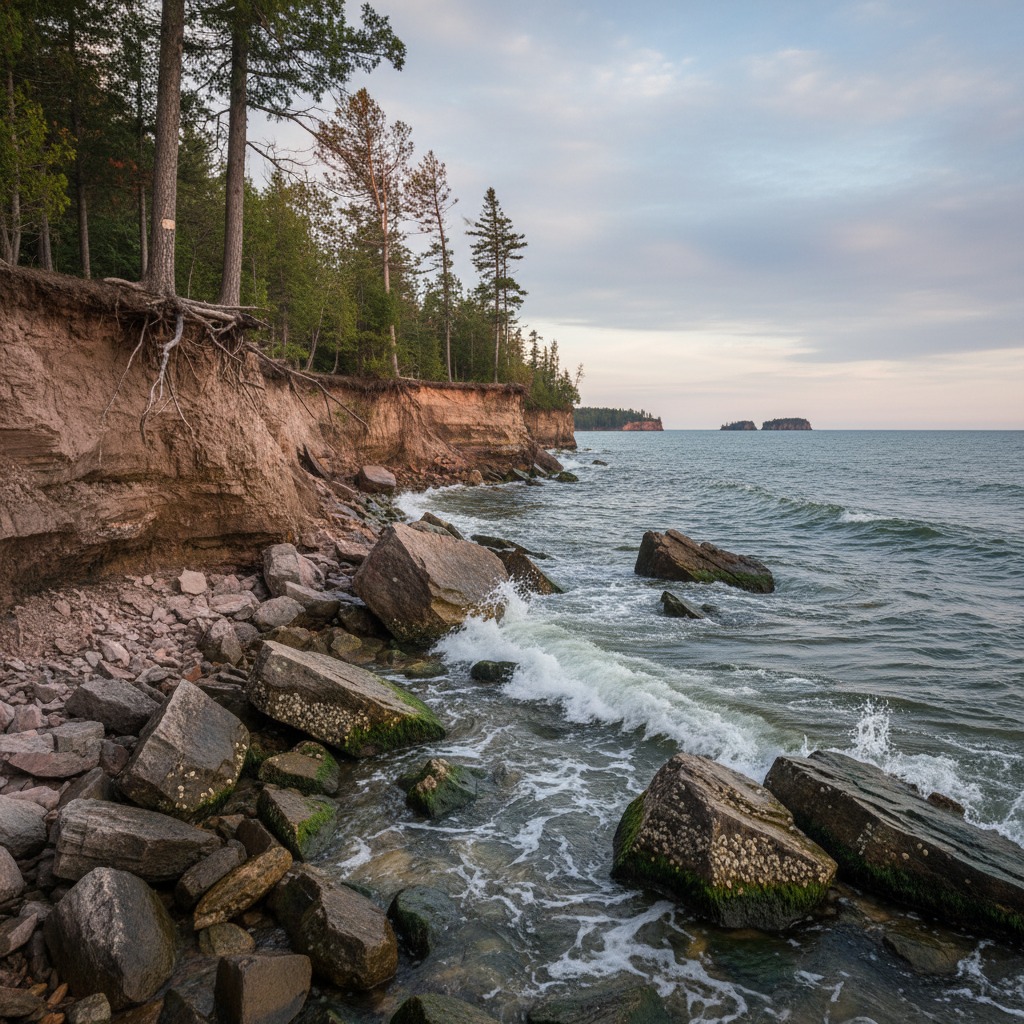
The first sign is usually subtle. A tree root that used to be underground is now exposed at the edge of the bluff. The distance between the lawn and the drop-off to the water, which once felt generous, seems shorter than you remember. A section of the bank that was solid last fall has slumped and slid toward the water over the winter. For thousands of waterfront property owners across Ontario, erosion is not a hypothetical risk discussed in planning documents. It is a visible, measurable, and accelerating reality that is literally eating their land, one storm at a time.
Shoreline erosion along the Great Lakes and Ontario's inland waterways is driven by a combination of forces: wave action during storms, water level fluctuations that expose and then batter different sections of the bank, ice pressure that grinds and pushes against vulnerable shorelines, surface water runoff that carves channels through exposed soil, groundwater seepage that undermines banks from within, and the loss of natural vegetation that once held shoreline soils in place. Climate change is intensifying several of these factors simultaneously, with more frequent extreme storms, increasingly unpredictable water levels, and shorter ice seasons that leave shorelines exposed to winter wave action for longer periods than historical norms.
Understanding What Type of Erosion You Are Facing
Not all erosion is the same, and the type of erosion affecting your property determines the appropriate response. Treating the wrong type of erosion with the wrong solution can waste money and, in some cases, actually accelerate the problem. Understanding the mechanism at work is the essential first step.
Toe erosion occurs at the base of a bluff, where wave action undercuts the soil, causing the unsupported upper portion to collapse. This is the most common form on Great Lakes bluffs and is worst during periods of high water combined with storms. Surface erosion occurs when rainfall and runoff wash soil from the bank face, creating rills and gullies that deepen over time. It is accelerated by vegetation removal, foot traffic, and drainage patterns that concentrate water flow. Groundwater seepage erosion happens when water flowing through the soil emerges at the bank face, carrying fine particles and undermining the structure from within.
Many waterfront properties experience more than one type simultaneously. A Great Lakes bluff property might have toe erosion from waves at the base, surface erosion from rainfall on the face, and seepage from drainage above. Each component needs to be addressed for protection to be effective.
Getting a Professional Assessment
Before taking any action, have the erosion assessed by a qualified professional. For bluff and bank erosion, this typically means a geotechnical engineer with experience in shoreline processes. For Great Lakes shoreline erosion, a coastal engineer who understands wave dynamics, sediment transport, and lake level patterns is the appropriate specialist. The assessment should identify the type and rate of erosion, the contributing factors, the stability of the remaining land, and the options for protection with realistic cost estimates for each.
This professional assessment is not just good practice. It is also typically required by the local conservation authority before any shoreline protection work will be permitted. The conservation authority needs to understand what is happening and what is proposed before granting approval for work that affects the shoreline. Submitting an application without a professional assessment will usually result in the application being returned with a request for supporting documentation, adding weeks or months to the timeline.
Historical aerial photographs, available through municipal planning departments, the Ontario government archives, and online mapping services, can reveal the rate of erosion over time. Comparing shoreline positions across decades of photographs provides a measurable record that helps predict future erosion rates and informs decisions about how urgently protection is needed. A property that has lost two metres of land in 30 years is in a different situation than one that has lost two metres in three years.

Hard Engineering: Fighting the Forces
Hard engineering approaches use physical structures to resist erosion forces and hold the shoreline in place. They are typically more expensive than naturalized approaches, but they may be the only viable option for severe erosion situations where the shoreline is retreating rapidly toward structures.
Rock revetments are the most common hard engineering solution in Ontario. Large angular stones are placed along the toe of the bluff in a profile designed to absorb wave energy and prevent undercutting. A properly engineered revetment can be effective for decades, but costs typically range from $500 to $1,500 per linear metre, with large projects exceeding $100,000. Sheet pile walls, gabion baskets, and concrete structures are other options, each with specific applications and limitations.
All hard engineering approaches share a contentious challenge: they protect the property behind them but can redirect erosion energy to adjacent unprotected shoreline, potentially accelerating erosion on neighbouring properties. This redirection effect is central to the ongoing shoreline armouring debate and is a reason conservation authorities review these projects carefully.
Naturalization: Working With the Landscape
Naturalization approaches use vegetation, regrading, and natural materials to work with erosion processes rather than overpower them. They are generally less expensive, preferred by conservation authorities, and provide ecological benefits. Regrading the bank to a stable slope, then planting native vegetation whose roots bind soil and whose canopy protects against rain impact, is the most common approach. Bioengineering techniques such as live stakes and coir logs provide immediate stabilization while plants establish.
The limitation is that naturalization may not be sufficient for severe toe erosion driven by wave action. In many cases, the most effective strategy combines hard engineering at the toe with naturalization on the bank face above.
The Regulatory Process for Shoreline Protection
Any shoreline protection work in Ontario requires permits from the local conservation authority and may require additional approvals from federal agencies if the work involves placement of material in the water or could affect fish habitat. The permitting process can take three to six months from application to approval, and it requires professional drawings, engineering reports, and sometimes an environmental assessment documenting the potential impacts of the proposed work.
Timing restrictions may limit construction to specific months of the year to protect fish spawning periods. In many areas, in-water work is restricted to a summer window that avoids the spring and fall spawning seasons of sensitive species. This means that even after permits are obtained, the actual construction may need to wait for the appropriate timing window, potentially adding months to the overall project timeline.
Do not undertake shoreline protection work without permits. Unpermitted work can result in orders to remove the installation, fines that can reach tens of thousands of dollars, and restoration costs that far exceed the cost of doing it properly in the first place. The erosion situation along the Great Lakes has led some desperate property owners to install emergency protection without permits, and the consequences, both regulatory and financial, have been severe.

Insurance, Property Value, and Financial Implications
Homeowner insurance policies in Ontario typically do not cover gradual erosion damage or the cost of erosion protection. Some policies exclude erosion entirely. Others cover sudden erosion events, such as a bluff collapse during a major storm, but not the gradual retreat that precedes the collapse. Understanding your policy's coverage and its exclusions is essential. If erosion is an active threat to your property, discuss it with your insurer and review your flood and erosion risk coverage options before a claim becomes necessary.
Erosion also affects property value significantly. A property with active erosion is worth less than one with a stable shoreline. If you are selling, erosion must be disclosed. If you are buying, investigate the history thoroughly and factor protection costs into your offer.
Act Early: The Most Important Advice
The single most important piece of advice for waterfront property owners facing erosion is to act before the situation becomes critical. Early intervention is less expensive, more effective, and easier to permit than emergency measures taken when the house is 10 metres from the edge and the conservation authority is dealing with a crisis application. Monitor your shoreline annually. Photograph the same locations each year and note changes in the bank profile. Maintain natural vegetation along the shore. Address drainage issues that direct surface water toward the bank edge. And consult a professional at the first sign of accelerating erosion, not the last.
The Ontario government provides information on shoreline management including the role of conservation authorities in regulating shoreline activities. For Great Lakes specific information, the International Joint Commission provides water level data and research on shoreline processes affecting communities on both sides of the border.
By Marcus Chen, Environment Reporter