Public Waterfront Access: A Town-by-Town Look
Why walking to the water is easy in some Ontario towns and nearly impossible in others
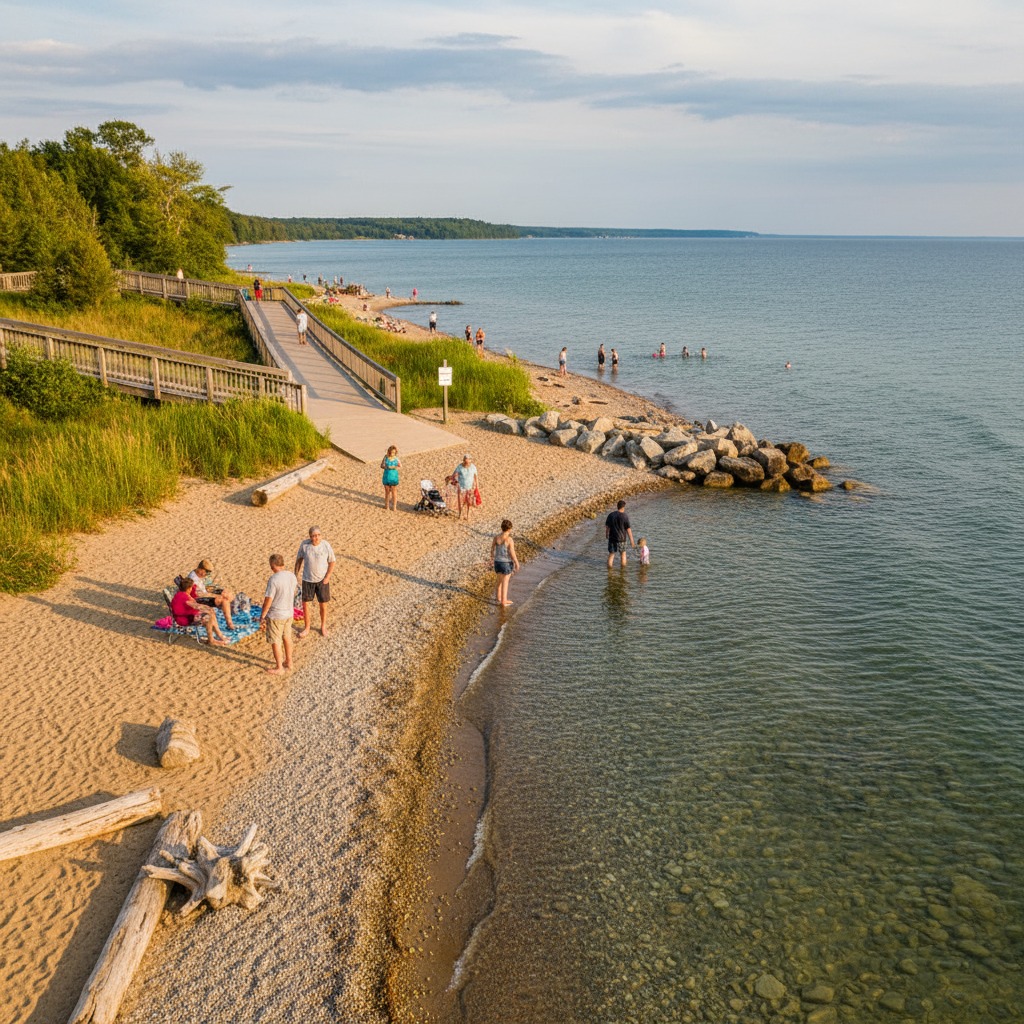
In Ontario, the legal framework around water access is clear in principle. Crown ownership of the beds of navigable waterways means the public has the right to use the water itself. But the legal right to be on the water means nothing if you cannot physically reach it. Getting from a public road to the water's edge requires crossing land, and in many Ontario communities, the land between the road and the shore is entirely private. The result is a patchwork of access that varies enormously from one town to the next, shaped by history, planning decisions, political will, and the balance of power between public interest and private property.
Some Ontario towns have embraced public waterfront access as a core value, investing in parks, trails, boat launches, and shoreline paths that ensure every resident and visitor can reach the water. Others have allowed private development to consume virtually every metre of shoreline, leaving the public with no practical way to enjoy the waterway that defines their community. The differences are stark, and they tell us a great deal about what each community values.
Towns That Get It Right
Cobourg is routinely cited as one of the best examples of public waterfront access in Ontario. The town's Victoria Park occupies prime lakefront real estate on Lake Ontario, providing a large public beach, a boardwalk, open green space, and direct visual and physical connection between the downtown and the water. The beach is free to access. The park is well maintained. The waterfront feels like it belongs to everyone, because it does. This did not happen by accident. Cobourg has made deliberate decisions over decades to prioritize public ownership and public use of its most valuable shoreline.
Collingwood on Georgian Bay has similarly invested in waterfront access, with Sunset Point Park and Millennium Park providing extensive public shoreline. The town's trail network connects these spaces and makes it possible to walk along the waterfront for considerable distances without encountering barriers. The harbour area, while developed with commercial and residential uses, maintains a public boardwalk that keeps the water visible and accessible.
Orillia, on the shores of Lake Simcoe and Lake Couchiching, has a waterfront trail system that runs for kilometres along both lakes. Couchiching Beach Park is a large, well-maintained public space right at the edge of downtown. The town treats its waterfront as a public amenity first, and the quality of life that this provides is evident in the way residents use these spaces year-round, from summer swimming to winter walking to spring birdwatching along the shore.
Towns That Struggle
Not all communities have been as intentional about maintaining public waterfront access. In many lakefront and riverfront towns, particularly those where cottage and residential development arrived before comprehensive planning, the shoreline has been carved into private lots with little or no public access between them. You can drive through a town, know that a beautiful lake or river is just a few hundred metres away, and find no way to reach it on foot.
Parts of the Lake Simcoe shoreline illustrate this problem. In some communities, cottage-era development consumed every available metre of lakefront. Road allowances that once provided public access to the water have been quietly absorbed by adjacent property owners over the years. Attempts to reclaim these access points are contentious, expensive, and often unsuccessful. The result is kilometres of shoreline that is functionally private, even where the legal right of public access may technically exist.
Similar patterns exist along stretches of Lake Huron, the Kawartha Lakes, and the Rideau system. In communities where the property tax base is dominated by waterfront owners, there is often political resistance to spending public money on access improvements that those same owners view as threats to their privacy and property values. The tension between public and private interests at the shoreline is one of the most persistent conflicts in Ontario municipal politics.

What Makes the Difference
The communities with the best public waterfront access tend to share several characteristics. They made early decisions to reserve shoreline for public use, often through parkland dedication, municipal land purchases, or planning policies that required public access as a condition of development. They maintained road allowances and other legal access points rather than allowing them to be privatized. They invested in the infrastructure needed to make access pleasant and functional, including parking, paths, signage, washrooms, and maintenance.
Perhaps most importantly, communities with good access have political cultures that view the waterfront as a shared resource rather than a private amenity. In these towns, council members, staff, and residents understand that the long-term health of the community depends on ensuring that the water is available to everyone. This is not just an abstract principle. Towns with generous public waterfront access tend to have stronger tourism economies, higher quality of life ratings, and more engaged civic participation than those where the shoreline is locked behind private fences.
The communities where access is poorest are often those where development outpaced planning. In areas that were subdivided for cottage lots before modern planning legislation existed, the damage was done before anyone thought to require public access. Correcting these historical patterns is difficult. Buying back waterfront land is expensive. Enforcing existing access rights is legally complex. And the political dynamics in communities where waterfront property owners hold significant influence make it hard to build consensus for change.
Road Allowances: The Hidden Access Network
Across Ontario, thousands of road allowances extend from public roads to the water's edge. These allowances were part of the original survey grid and were intended to provide public access to the shoreline. In many cases, they have never been developed into actual roads, and adjacent property owners have maintained them, fenced them, landscaped them, or simply treated them as their own for decades.
The legal status of these allowances varies. Some have been formally closed and sold by the municipality. Others remain technically open but are functionally inaccessible. In communities where public access is a priority, municipalities have inventoried their road allowances, cleared encroachments, and developed at least some of them into formal access points. In communities where the political will is lacking, the allowances remain in legal limbo.
The disputes over shared waterfront access that arise from road allowance conflicts can be bitter and prolonged. Property owners who have maintained an allowance for years feel a legitimate sense of ownership, even if the law does not support their claim. New residents or visitors who attempt to use these access points may face hostility, obstruction, or misleading signage. Resolving these conflicts requires clear policy, consistent enforcement, and a willingness to prioritize the public interest over individual convenience.
Comparing Approaches Along the Same Waterway
One of the most revealing exercises is to compare access policies among communities on the same body of water. Along the Trent-Severn Waterway, for example, some towns have excellent public waterfront spaces while neighbouring communities offer almost none. The waterway is the same. The difference is entirely a product of local decisions about land use, investment, and priorities.
Fenelon Falls, with its waterfront park beside the locks and its pedestrian bridge over the falls, provides a model of how a small community can make its waterway accessible and central to community life. A few lakes away, other communities on the same system offer little more than a narrow boat launch and a No Parking sign. The water is equally beautiful in both places. The public experience of it could not be more different.

Looking Forward
The trend in Ontario is slowly moving toward greater public waterfront access, driven by a growing recognition that accessible waterfronts produce economic, social, and environmental benefits that private exclusivity does not. Provincial policy statements encourage municipalities to provide and maintain public access to shorelines. Conservation authorities and land trusts are acquiring key properties to ensure permanent access. And public expectation is shifting, particularly among younger residents who view waterfront access as a right rather than a privilege.
But progress is uneven. For anyone evaluating a waterfront community, whether as a potential resident or simply as a visitor, the state of public access is one of the most telling indicators of what the town values. Walk to the water. If you can get there easily, if the path is welcoming, if the shore feels like it belongs to you, you have found a community that understands what its waterfront is for. If you cannot reach the water without trespassing, that tells you something too.
By Nora Whitfield, Policy and Planning Writer