Lake Simcoe Under Shoreline Pressure
Ontario's most accessible large lake is paying the price of popularity

Lake Simcoe sits at the northern edge of the Greater Toronto Area, close enough that its southern shore is within commuting distance of the city. This proximity has made Simcoe the most developed large lake in Ontario, with a shoreline that supports everything from dense urban waterfront in Barrie and Orillia to cottage communities on the eastern shore to agricultural land draining into the lake from the south and west. The result is a lake under extraordinary pressure, a body of water whose ecological health is directly tied to the planning decisions, infrastructure investments, and regulatory choices made by the municipalities and agencies that govern its watershed.
The numbers tell part of the story. The Lake Simcoe watershed is home to roughly 450,000 people, a number that has been growing steadily and is projected to continue growing as the GTA expands northward. Barrie, the largest city on the lake, has grown from about 80,000 in 2000 to over 150,000 today, and its official plan anticipates further growth. Orillia, Innisfil, Georgina, and Beaverton have all experienced significant development. Each new resident, each new subdivision, each new commercial development adds to the cumulative pressure on the lake and its shoreline.
Understanding what is happening to Lake Simcoe requires looking at three interconnected issues: water quality, development pressure, and regulatory capacity. None of these can be addressed in isolation, and the future of the lake depends on getting all three right.
Water Quality: Progress and Fragility
Lake Simcoe's water quality has been a concern for decades. Phosphorus loading from agricultural runoff, stormwater, and aging septic systems promoted excessive algae growth and reduced dissolved oxygen levels in the lake's deeper waters. The consequences were severe. The lake trout fishery, once one of the best in southern Ontario, collapsed in the 1960s and 1970s as oxygen levels in the deep water fell below what the fish needed to survive. It was an ecological disaster that took decades of remediation work to begin reversing.
The Lake Simcoe Protection Plan, established in 2009 under the Lake Simcoe Protection Act, set phosphorus reduction targets and established policies to limit development impacts on the lake. The plan has achieved measurable progress. Phosphorus loading from point sources such as sewage treatment plants has decreased significantly. Water clarity has improved in some areas. Lake trout stocking programs have shown cautious success, though a self-sustaining population has not yet been established.
But the gains are fragile. Non-point source pollution, the diffuse runoff from agricultural fields, roads, parking lots, and lawns, remains difficult to control and continues to deliver phosphorus and other contaminants to the lake. Climate change adds another layer of complexity, as warmer water temperatures favour algae growth and reduce the oxygen-holding capacity of the deep water. The algae bloom problems that have plagued Lake Erie serve as a warning of what can happen when nutrient loading overwhelms a lake's capacity to process it.
The septic system issue is particularly acute around Lake Simcoe. Thousands of older cottages and homes on the lake rely on septic systems that were installed under standards less stringent than today's requirements. Some of these systems are failing, contributing phosphorus and bacteria to the lake. Municipal sewer extensions have replaced septic systems in some areas, but the cost of extending sewer lines to all shoreline properties is prohibitive, leaving a patchwork of aging systems that will continue to be a source of concern for decades.

Development Pressure: Multiple Fronts
The growth pressure on Lake Simcoe's shoreline comes from multiple directions. Residential development, both low-density cottage conversion and high-density condominium and townhouse projects, continues to increase the built footprint along the shore. The city of Barrie's waterfront has been particularly affected, with new residential towers and commercial developments transforming what was once a modest lakefront into a more urban landscape. The condominium development pattern that has reshaped waterfronts across southern Ontario is very much present on Lake Simcoe.
Cottage conversions are a distinct but equally significant pressure. Properties that were designed as seasonal cottages with small footprints and modest septic systems are being converted to year-round homes with larger footprints, more impervious surface, and greater water demand. Each individual conversion may seem minor, but cumulatively they increase the stress on the shoreline and the lake. The conversion process often triggers a need for upgraded building permits near water, but enforcement is uneven, and some conversions proceed without the necessary approvals.
Commercial and recreational development adds another layer. Marinas, resorts, golf courses, and tourism facilities compete for waterfront land and contribute their own environmental impacts. Agricultural intensification in the watershed, where farms increase productivity to remain viable in the face of rising land values, increases fertilizer use and runoff. The interactions between these different pressures are complex, and addressing one without considering the others risks merely shifting the problem.
The Regulatory Landscape
Lake Simcoe has one of the most developed regulatory frameworks of any lake in Ontario. The Lake Simcoe Protection Plan provides the overarching policy direction. The Lake Simcoe Region Conservation Authority regulates development within the watershed and monitors environmental conditions. Municipal official plans and zoning bylaws govern land use at the local level. The provincial policy statement provides additional direction on matters of provincial interest, including natural heritage protection and water resource management.
On paper, this is a comprehensive framework. In practice, its effectiveness depends on the capacity and willingness of the various agencies to implement it consistently. Conservation authorities have faced funding pressures and political challenges in recent years, and their ability to regulate development has been questioned by both those who think they do too much and those who think they do too little. Municipal planning departments, which handle the day-to-day decisions about development applications, face intense pressure from developers and property owners to approve projects, and the zoning battles on the lakefront can be fierce.
The result is a regulatory landscape that is stronger on the page than it sometimes proves to be in practice. Individual decisions that seem reasonable in isolation, approving one more lot severance, granting one more variance, permitting one more dock expansion, accumulate into a pattern of incremental degradation that is difficult to reverse once it becomes established. The principle of cumulative impact, the idea that the total effect of many small actions can be greater than the sum of their parts, is acknowledged in policy but inconsistently applied in practice.
Recreation and the Community Connection
Lake Simcoe is one of the premier recreational lakes in Ontario, and the recreation it supports is directly connected to its environmental health. The lake's ice fishing culture, one of the most active in the province, depends on healthy fish populations, which depend on water quality. Summer boating, swimming, and shore fishing all depend on water that is clean enough to enjoy safely. When blue-green algae blooms close beaches or advisories warn against consuming fish, the recreational value of the lake diminishes, and with it the economic and social value that the lake provides to its communities.
The connection between environmental health and community well-being is well understood by many Lake Simcoe residents, who have been among the most active participants in citizen science water monitoring programs in the province. Volunteer groups collect water quality data, participate in shoreline cleanups, and advocate for stronger environmental protections. This community engagement is one of Lake Simcoe's greatest assets, a base of informed, motivated residents who understand what is at stake and are willing to work to protect it.
What Is at Stake
Lake Simcoe is a test case for whether Ontario can manage the environmental pressures of growth on its most accessible waterways. The lake is close to the province's largest population centre, and the development pressure will only increase as the GTA expands. The forces driving growth, including housing demand, infrastructure expansion, and economic development, are powerful and politically influential. The forces arguing for restraint, including environmental science, conservation policy, and community advocacy, must make their case again and again with each new development proposal.
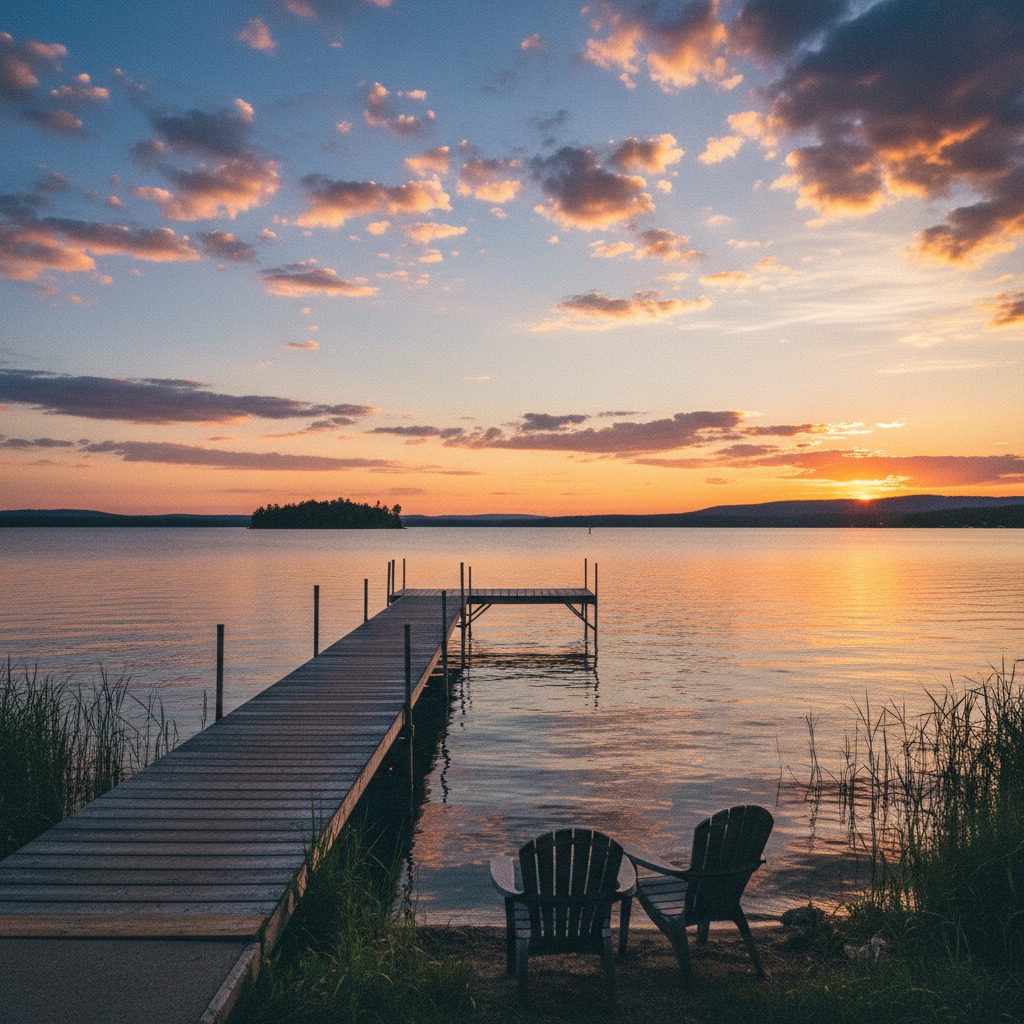
For current and prospective shoreline residents, the message is clear: the health of the lake and the value of shoreline property are directly connected. Investments in water quality protection, responsible development, and shoreline naturalization are not just environmental measures. They are investments in the long-term value and livability of the community. A Lake Simcoe with clean water, healthy fish populations, and swimmable beaches will sustain property values and community quality of life indefinitely. A Lake Simcoe degraded by unchecked development and nutrient loading will not.
The tools to protect the lake exist. The science is clear. The community will is strong. What remains to be seen is whether the political and institutional capacity to act on all three will prove equal to the challenge.
By Marcus Chen, Environment Reporter