Waterfront Life in the Kawarthas
Where cottage culture meets year-round community along the lakes and locks of central Ontario

The Kawartha Lakes are not the biggest lakes in Ontario, nor the deepest, nor the most remote. They do not have the crashing waves of the Great Lakes or the granite drama of Muskoka. What they have is something quieter and, for many people, more compelling: a chain of warm, navigable lakes connected by rivers, locks, and narrow channels that together create one of the most intimate waterfront landscapes in the province. You can paddle from Lakefield to Fenelon Falls, passing through lock after lock, lake after lake, and never lose the sense that you are travelling through a living community rather than a wilderness.
This is what makes the Kawarthas distinct. The waterfront here is not separate from the community. It is woven into it. The locks are gathering places. The lakes are shared spaces where cottagers, permanent residents, boaters, anglers, and paddlers coexist in a complex social arrangement that has been evolving for more than a century. Understanding waterfront life in the Kawarthas means understanding this interplay between water and community, between tradition and change, between the seasonal rhythm that defined the region for generations and the year-round reality that is reshaping it now.
The Lakes and Their Character
The Kawartha Lakes system includes Stony Lake, Clear Lake, Lovesick Lake, Lower Buckhorn Lake, Buckhorn Lake, Chemong Lake, Pigeon Lake, Sturgeon Lake, Cameron Lake, Balsam Lake, and several smaller bodies of water connected by the Trent-Severn Waterway. Each lake has its own personality. Stony Lake, on the northern edge of the system where the Canadian Shield meets the limestone plain, is deep and rocky, with hundreds of islands and a long history as a summer retreat for wealthy families from Toronto and Peterborough. Chemong Lake, shallower and warmer, is popular for fishing and supports a mix of cottages and permanent homes along its shores. Pigeon Lake and Sturgeon Lake, the largest in the chain, offer broad expanses of open water that attract boaters and have supported lakeshore communities for generations.
The variety of the lakes means that the Kawarthas attract a range of waterfront residents and visitors. Families looking for warm, sandy swimming beaches gravitate to the southern lakes. Paddlers and nature enthusiasts prefer the quieter, more sheltered waters of the northern chain. Boaters who want room to cruise choose the larger lakes with their long sightlines and open water. Anglers follow the fish, which vary by lake, by season, and by the health of the particular ecosystem.
What all the lakes share is accessibility. The Kawarthas are roughly 90 minutes to two hours from the Greater Toronto Area, making them reachable for a weekend without the long drive that Muskoka or Georgian Bay require. This accessibility has been both a blessing and a burden. It has sustained the cottage economy for over a century, but it has also brought development pressure that the lakes and their communities are struggling to manage.
Cottage Culture and Its Evolution
The cottage tradition in the Kawarthas dates to the late 1800s, when families from Peterborough, Lindsay, and Toronto began building summer retreats on the lakes. The early cottages were simple: wood-frame structures with outhouses, hand-pumped wells, and wood stoves. They were places to escape the heat and the city, to swim, to fish, to sit on the dock and watch the sun set. The cottage was not a luxury. It was a modest family tradition passed from one generation to the next.
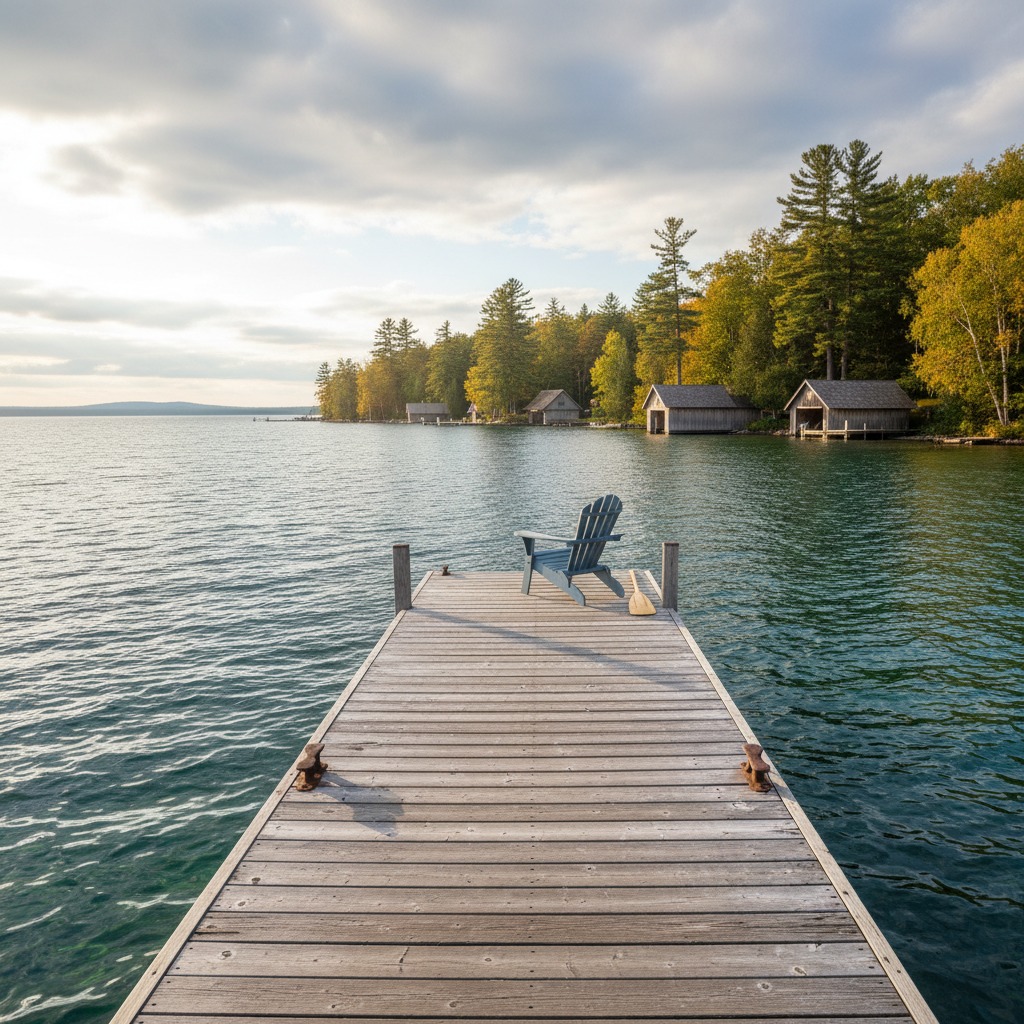
That tradition is changing. Many of the modest cottages that defined the Kawarthas are being renovated into year-round homes or torn down and replaced with larger, modern structures. The waterfront property market in the Kawarthas has followed the same trajectory as other desirable regions in Ontario: prices have risen sharply, driven by urban demand and pandemic-era migration. Properties that sold for $200,000 a decade ago now trade for $600,000 or more. The modest family cottage on a shared lot is giving way to the winterized home with a permanent dock, a boathouse, and a manicured lawn.
This evolution is not uniformly lamented. Many of the old cottages were poorly insulated, had failing septic systems, and were in need of significant investment. Replacing them with modern, year-round homes can improve both the comfort of the residents and the environmental performance of the property, provided the new construction follows current building regulations near water. But the transition also changes the character of the lake community. A neighbourhood of seasonal cottagers who arrive in June and leave in September has a different social fabric than a neighbourhood of year-round residents who commute to Peterborough or work remotely.
The Towns at the Centre
The Kawarthas are anchored by a handful of towns that sit at the intersections of water and road. Bobcaygeon, straddling the canal between Sturgeon Lake and Pigeon Lake, is the unofficial capital of the cottage country Kawarthas. The lock station in the centre of town is a gathering place all summer, with boaters waiting to pass through, spectators watching from the bridge, and the main street shops and restaurants drawing a steady flow of visitors.
Fenelon Falls, where Cameron Lake drops into Sturgeon Lake, has a similar character: a small downtown centred on the waterfall and the lock, with shops, restaurants, and services that serve both the town population and the surrounding lake communities. Buckhorn, Lakefield, and Young's Point are smaller still, but each functions as a hub for the cottagers and residents in its immediate area.
These towns face a particular challenge. They must serve two populations with different needs and different expectations. The year-round residents need reliable services, affordable housing, healthcare access, and employment. The seasonal population wants recreation, dining, shopping, and the charm that drew them to the area in the first place. Balancing these demands is the central task of municipal government in the Kawarthas, and the land use debates in these small towns can be fierce.
Water Quality and Environmental Pressure
The health of the Kawartha Lakes is the foundation of everything else. The economy, the property values, the recreation, the quality of life all depend on clean water. And the water quality in the Kawarthas has been under pressure for decades. Phosphorus loading from agricultural runoff, aging septic systems, stormwater, and shoreline development has contributed to algae growth and declining water clarity in several of the lakes. Blue-green algae blooms, which can produce toxins harmful to humans and animals, have been reported with increasing frequency on some Kawartha lakes, particularly Chemong Lake and parts of Pigeon Lake.
The sources of the problem are diffuse and difficult to address. Agriculture in the watershed contributes phosphorus through fertilizer and manure runoff. Older septic systems on lake properties leak nutrients into the groundwater. Development increases impervious surfaces, which increases stormwater runoff. The cumulative effect of these inputs is measurable in the water quality data that volunteer monitoring programs and conservation authorities have been collecting for years.
Addressing the problem requires action on multiple fronts. Municipal sewer connections for properties currently on failing septic systems. Stronger agricultural best management practices in the watershed. Naturalized shorelines to filter runoff before it reaches the lake. Updated development regulations that account for cumulative impacts. Progress has been made on all of these fronts, but the pace of improvement has not always kept up with the pace of development.
The Year-Round Transition
The most significant change underway in the Kawarthas is the transition from seasonal to year-round waterfront living. What was once a region where most waterfront properties sat empty from October to May is becoming a region where a growing share of lakeside residents live and work year-round. This transition has implications for everything from road maintenance to school enrollment to the demand on emergency services.
Year-round waterfront living in the Kawarthas has genuine appeal. The lakes are beautiful in every season. The Kawarthas region offers cross-country skiing, snowmobiling, and ice fishing in winter. Fall colour along the lakes is stunning. Spring brings the return of loons and the opening of the locks. For people who can work remotely or who have retired, living on a Kawartha lake year-round offers a quality of life that is hard to match in urban Ontario.

But the transition is not without friction. Year-round residents have different expectations than seasonal cottagers. They want plowed roads, reliable internet, and access to healthcare. They generate year-round demand on services that were scaled for a smaller permanent population. And their presence changes the social dynamics of the lake community, replacing the seasonal camaraderie of summer cottaging with the more complex relationships of permanent neighbourhood life.
The Kawarthas are not going back to what they were. The modest cottage era, while fondly remembered, was sustained by a real estate market and a social structure that no longer exist. What the region is becoming, a blend of year-round waterfront community and seasonal retreat, is something new. Whether it preserves the qualities that made the Kawarthas special in the first place depends on the choices that residents, municipalities, and the province make about development, water quality, and the balance between growth and preservation.
By Sarah Oland, Waterfront Living Columnist